Clean & Lean: 5 Nights of Protein-Packed Dinners for Clean Eating

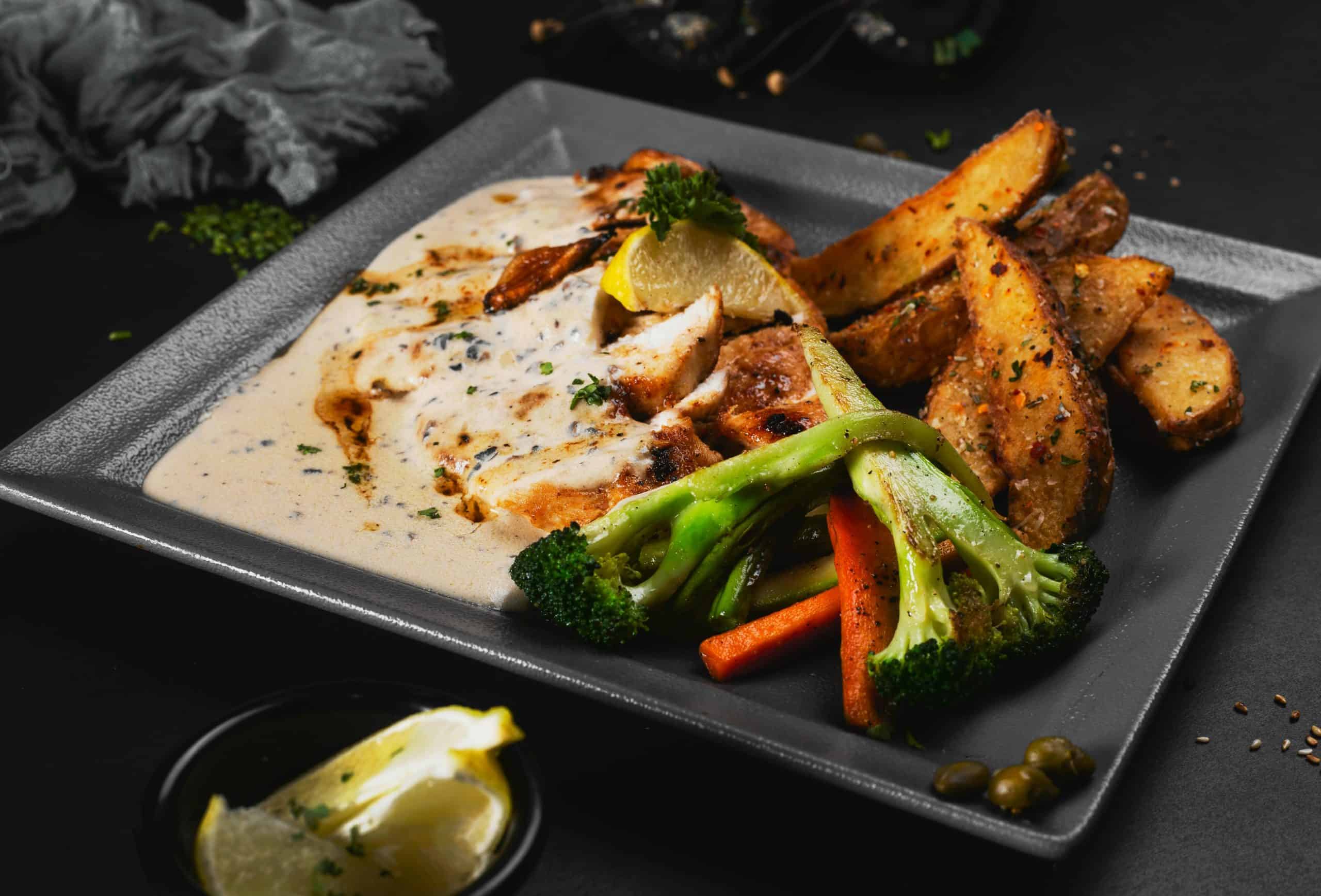
Getting a healthy dinner on the table every single weeknight can feel like a second job. Between work, kids, activities, and everything else pulling at your attention, it’s so easy to default to takeout or something processed. I’ve been there. And honestly, even after 37 years as a nurse and all my nutrition education, there were seasons of my life when dinner was chaos. See my Clean Eating Revolution: Transform Your Life in 2026 article.
That’s exactly why I created this week of clean & lean family dinners for clean eating. Each meal checks a few important boxes for me:
- Around 500 calories — satisfying but not heavy
- Easy to bump to 700 calories for bigger appetites or active days
- High protein (30–40g), healthy fat, and plenty of fiber
- Includes a variety of proteins — chicken, beef, pork, fish, beans, and pasta
- Loaded with vegetables, with swap options so nothing goes to waste
- Real food that your whole family will actually eat
This is the 80/20 approach in action. You don’t have to be perfect — you just have to show up most nights with something real. Let me show you how easy that can be.
Heads up — some links in this post are affiliate links, meaning I may earn a small commission if you shop through them, at no additional cost to you. I only recommend products I truly love and use myself.
Before You Start: A Few Things That Will Save You
These dinners are designed to be family-friendly and doable on a weeknight. Here’s what I always have ready:
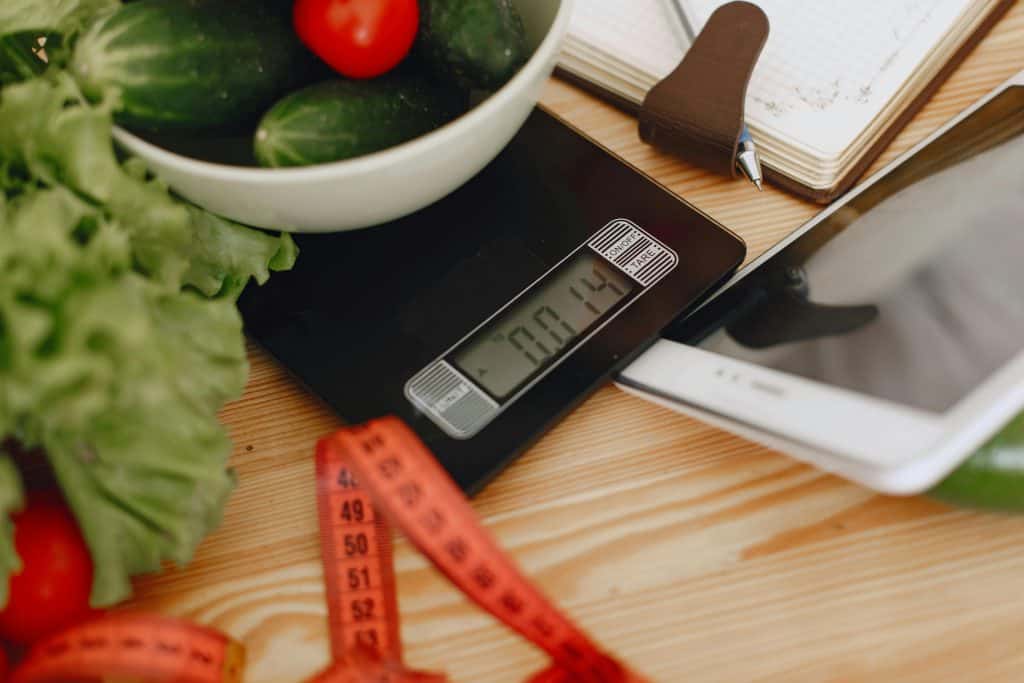
- A reliable kitchen scale — eyeballing protein portions is how calories creep up
- A large sheet pan and a heavy skillet — most of these meals use one or both
- Olive oil, avocado oil, garlic, onion, lemon, and a solid spice cabinet
- Prepped vegetables on Sunday — wash, chop, and store so weeknights are faster
One more thing: I’ve included vegetable and carb-swap suggestions for each meal. If your family hates zucchini or you’re out of quinoa, there’s always an option. Flexibility is part of clean eating done right.
Clean & Lean: Monday – Friday Dinner Plan for Clean Eating
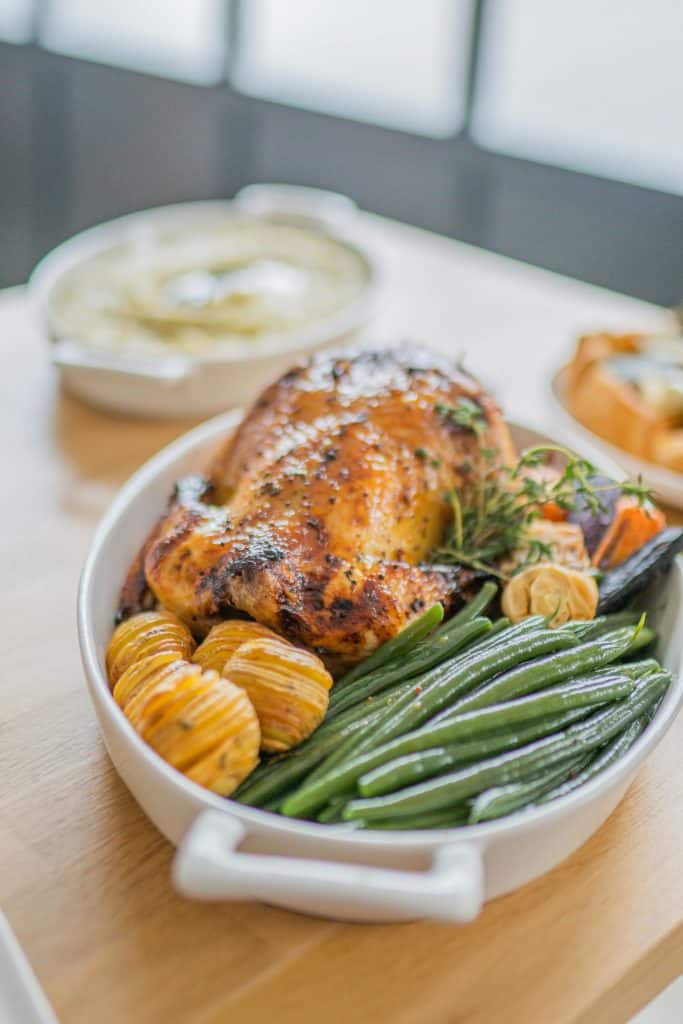
| MONDAY — CHICKEN Herb-Roasted Chicken Thighs with Roasted Sweet Potato & Broccoli |
| 📊 MACROS (500-cal base) ~500 cal | Protein: 38g | Fat: 16g | Fiber: 8g | Carbs: 28g BASE MEAL (500 cal): 2 bone-in chicken thighs (skin removed) + 1 cup cubed sweet potato (roasted) + 1.5 cups broccoli florets (roasted) + 1 tsp olive oil + garlic, rosemary, lemon zest ➕ ADD TO REACH 700 CAL: +1/2 cup cooked quinoa OR drizzle 1 tbsp tahini over broccoli OR add 1/4 avocado 🥦 VEGGIE SWAPS: Broccoli → green beans, asparagus, or broccolini | No sweet potato? Use butternut squash 🍚 CARB SWAPS: Sweet potato → white potato, brown rice, or riced cauliflower to lower carbs 👩🍳 QUICK STEPS: Preheat oven to 425°F. Pat chicken dry; season with garlic powder, rosemary, salt, and lemon zest. Toss sweet potato and broccoli in olive oil; spread on a large sheet pan. Nestle the chicken in the same pan. Roast for 35–40 min, until the internal temperature reaches 165°F. Rest 5 minutes before serving. Squeeze fresh lemon over everything. |
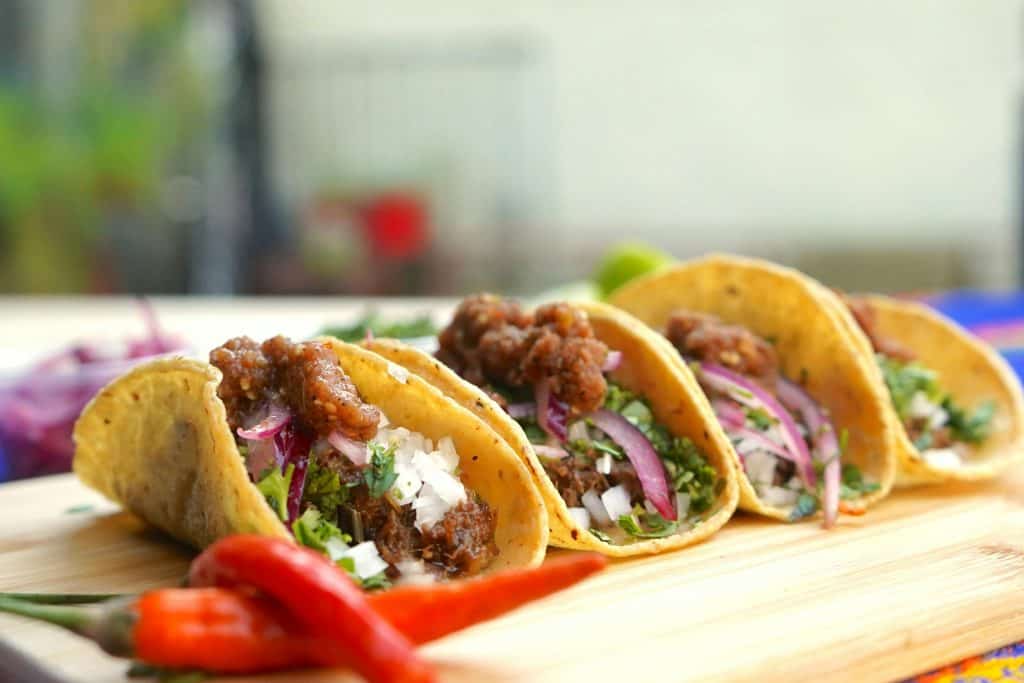
| TUESDAY — BEEF Lean Ground Beef Taco Bowls with Brown Rice & Black Beans |
| 📊 MACROS (500-cal base) ~500 cal | Protein: 34g | Fat: 14g | Fiber: 10g | Carbs: 40g BASE MEAL (500 cal): 4 oz lean ground beef (93/7) + 1/2 cup cooked brown rice + 1/3 cup black beans + 1/2 cup shredded cabbage + pico de gallo + lime + 1 tsp olive oil ➕ ADD TO REACH 700 CAL: +1/4 avocado sliced OR 2 tbsp shredded cheese OR extra 1/3 cup black beans 🥦 VEGGIE SWAPS: Cabbage → romaine, spinach, or arugula | Pico de gallo → fresh salsa or diced tomato + red onion 🍚 CARB SWAPS: Brown rice → cauliflower rice (saves ~150 cal) | sweet potato cubes | quinoa 👩🍳 QUICK STEPS: Brown ground beef in a skillet over medium-high heat; drain fat if needed.Season with chili powder, cumin, garlic powder, smoked paprika, and a pinch of salt.Warm black beans in a small saucepan; season with cumin and lime juice.Assemble bowls: rice → beef → beans → cabbage → pico → lime squeeze. |
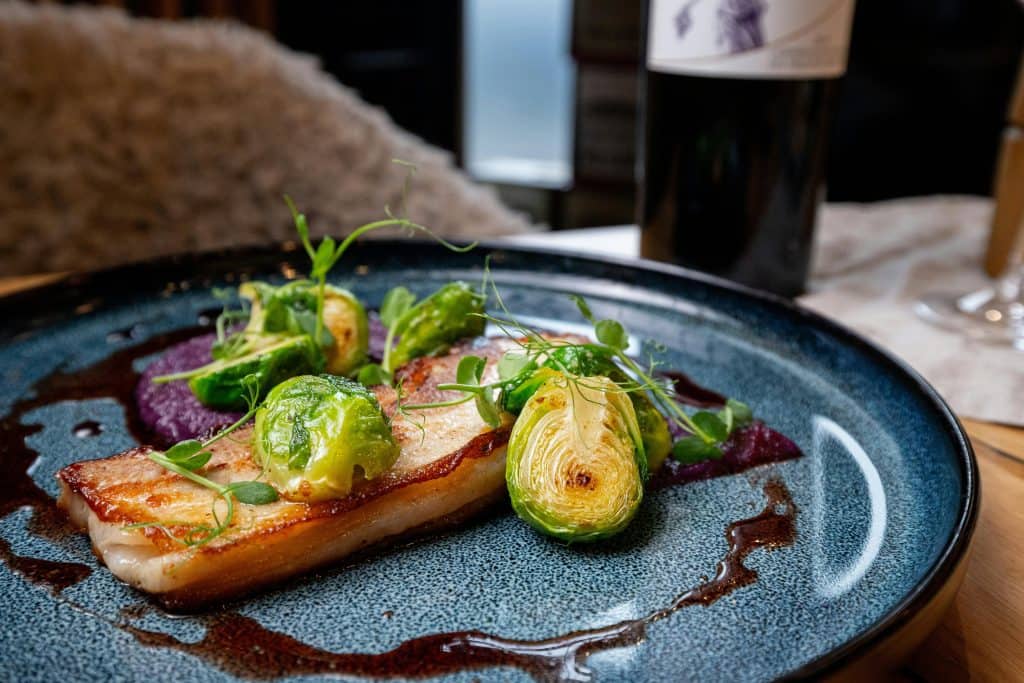
| WEDNESDAY — PORK Sheet Pan Pork Tenderloin with Roasted Brussels Sprouts & Fingerling Potatoes |
| 📊 MACROS (500-cal base) ~500 cal | Protein: 36g | Fat: 13g | Fiber: 7g | Carbs: 30g BASE MEAL (500 cal): 4 oz pork tenderloin + 1 cup Brussels sprouts (halved) + 3/4 cup fingerling potatoes (halved) + 1 tsp olive oil + Dijon mustard glaze + garlic ➕ ADD TO REACH 700 CAL: +Extra 1/4 cup potatoes OR 1 tbsp almond butter thinned with lemon as dipping sauce 🥦 VEGGIE SWAPS: Brussels sprouts → green beans, cauliflower florets, or shaved cabbage | Not a sprout fan? Sub snap peas 🍚 CARB SWAPS: Fingerling potatoes → sweet potato, white rice, or roasted beets for something different 👩🍳 QUICK STEPS: Preheat oven to 425°F. Trim pork tenderloin and coat with Dijon, garlic, and a little olive oil. Toss Brussels sprouts and potatoes with olive oil, salt, and pepper; spread on a sheet pan. Add pork on top. Roast for 25–30 min until the pork reaches 145°F internal temperature. Let pork rest 5–10 minutes before slicing. Serve with a squeeze of lemon. |
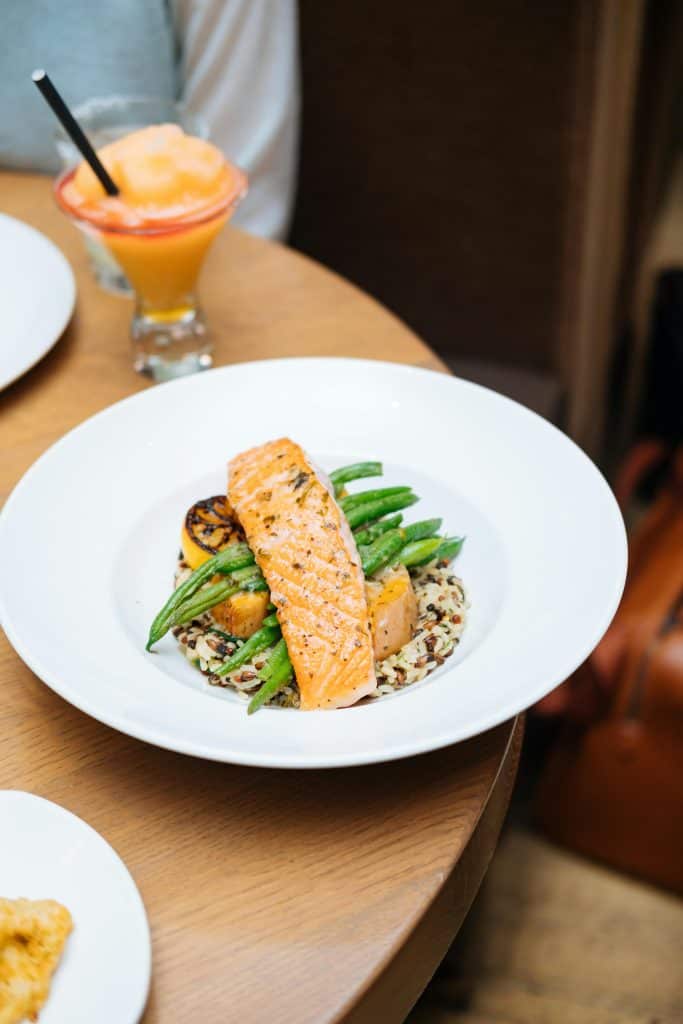
| THURSDAY — FISH Baked Salmon with Quinoa, Spinach & Lemon-Dill Sauce |
| 📊 MACROS (500-cal base) ~500 cal | Protein: 40g | Fat: 18g | Fiber: 5g | Carbs: 24g BASE MEAL (500 cal): 5 oz salmon fillet + 1/2 cup cooked quinoa + 2 cups fresh spinach (wilted) + 1 tsp olive oil + lemon-dill yogurt sauce (2 tbsp plain Greek yogurt + lemon + dill) ➕ ADD TO REACH 700 CAL: +Extra 1/4 cup quinoa OR 1/4 avocado + a drizzle of olive oil over spinach 🥦 VEGGIE SWAPS: Spinach → kale, Swiss chard, or arugula | Don’t like greens? Sub roasted zucchini or asparagus 🍚 CARB SWAPS: Quinoa → white rice, riced cauliflower, or roasted sweet potato cubes 👩🍳 QUICK STEPS: Preheat oven to 400°F. Season salmon with olive oil, salt, pepper, and garlic powder. Bake, skin-side down, for 12–15 minutes, until the salmon flakes easily with a fork. While salmon bakes, wilt spinach in a small skillet with olive oil and a pinch of garlic. Whisk together Greek yogurt, lemon juice, dill, and a pinch of salt for the sauce. Serve: quinoa → salmon → wilted spinach → drizzle of lemon-dill sauce. |
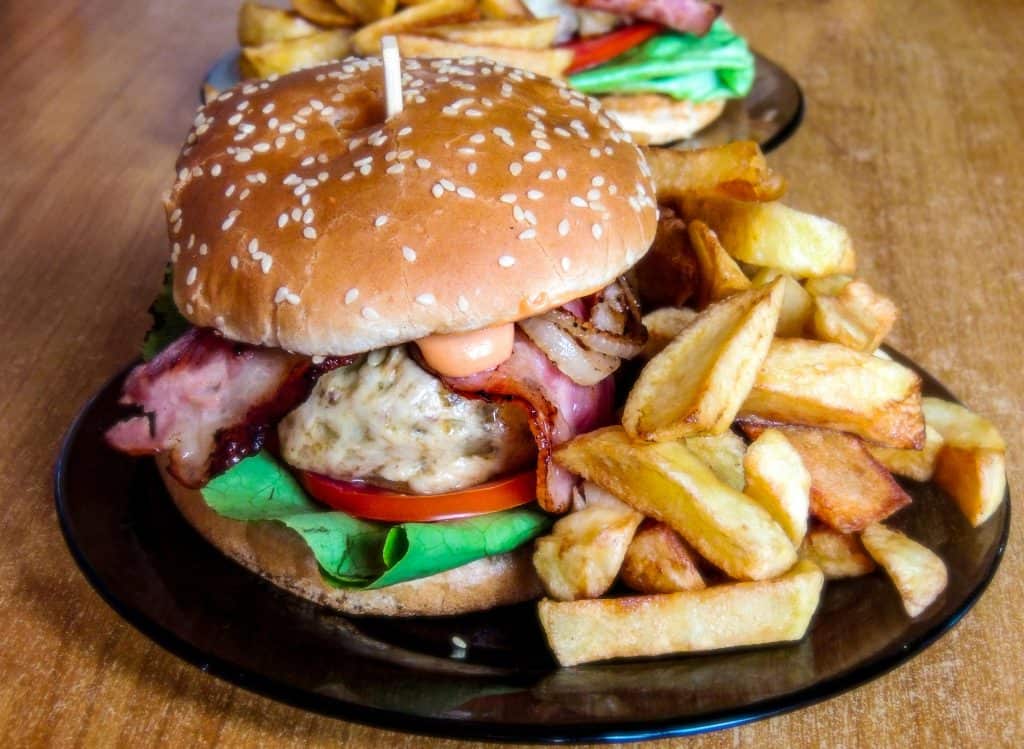
| FRIDAY — TURKEY Turkey Burgers with Homemade Oven Fries, Creamy Coleslaw & Baked Beans |
| 📊 MACROS (500-cal base) ~500 cal | Protein: 35g | Fat: 14g | Fiber: 9g | Carbs: 42g BASE MEAL (500 cal): 4 oz lean ground turkey burger patty (93/7, seasoned with garlic, Worcestershire, smoked paprika) + 1 whole wheat or lettuce wrap bun + 1 cup oven-baked potato fries (1 medium russet, tossed in 1 tsp olive oil + seasoned salt) + 1 cup creamy coleslaw (shredded cabbage + carrot + 2 tbsp Greek yogurt + apple cider vinegar + touch of honey + celery seed) + 1/3 cup baked beans ➕ ADD TO REACH 700 CAL: Add 1/4 avocado sliced on the burger OR add 1 slice clean cheese (grass-fed cheddar) + extra 1/2 cup oven fries OR double the baked beans to 2/3 cup 🥦 VEGGIE SWAPS: Coleslaw cabbage → broccoli slaw mix or shaved Brussels sprouts | No cabbage? Top burger with arugula, tomato & red onion instead | Add a dill pickle spear (zero calories, big flavor) 🍚 CARB SWAPS: Russet potato fries → sweet potato fries (more fiber + vitamin A) | Cauliflower “fries” for low-carb | Quinoa side salad instead of fries | Lettuce wrap instead of bun saves ~100 cal 👩🍳 QUICK STEPS: Preheat oven to 425°F. Cut a russet potato into thin strips; toss in olive oil, seasoned salt, garlic powder, and smoked paprika. Spread on a sheet pan in a single layer. Bake 25–30 min, flipping halfway, until golden and crispy. Make the coleslaw: combine shredded cabbage and carrot with Greek yogurt, apple cider vinegar, a touch of honey, celery seed, salt, and pepper. Toss well; refrigerate while you cook the rest. Warm the baked beans: combine canned navy beans with tomato paste, smoked paprika, a splash of apple cider vinegar, and a touch of maple syrup in a small saucepan. Simmer over low heat 10–15 min, stirring occasionally. Form ground turkey into a patty; season with garlic powder, Worcestershire sauce, smoked paprika, salt, and pepper. Cook in a lightly oiled skillet over medium-high heat for 4–5 min per side, until the internal temperature reads 165°F. Assemble: place the turkey patty on the toasted whole wheat bun. Serve alongside oven fries, a scoop of coleslaw, and a small bowl of baked beans. It’s Friday — enjoy every bite! |
How to Make Any of These 700 Calories
I designed each base meal at around 500 calories — enough to satisfy most adults without going overboard. But if you’re fueling a teenager, a spouse who works physically, or you had a really active day, 700 calories is completely reasonable and still clean.
Here are my go-to add-ons that keep the meal clean and balanced:
- Add 1/2 avocado → +160 cal, healthy fat
- Add 1/2 cup cooked grain (quinoa, rice) → +100–110 cal, complex carbs
- Add 1 tbsp nut butter or tahini drizzle → +90 cal, healthy fat + flavor
- Add extra protein (2 oz salmon, 2 oz chicken) → +100-120 cal, more muscle support
- Add 1/2 cup more beans → +100 cal, fiber + plant protein
The 700-calorie target is also great for anyone managing hormonal health, perimenopause energy needs, or simply who prefers more volume at dinner. You know your body — honor it.
Weeknight Success: My Top 5 Meal Prep Tips
After decades of working long nursing shifts and still trying to feed my family real food, I learned a few non-negotiables. These are the habits that make this plan actually work:
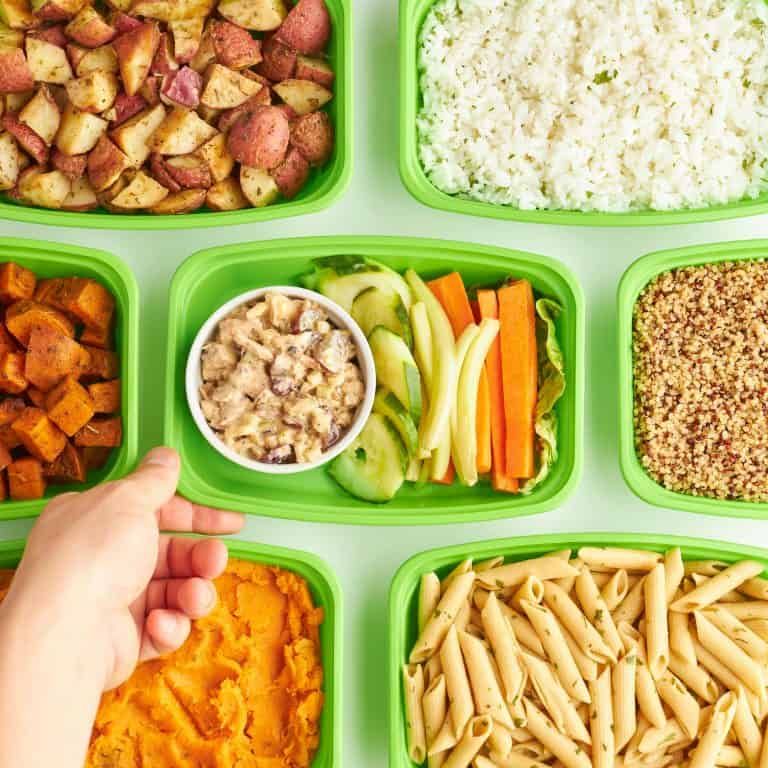
- Batch-cook your grains on Sunday. Brown rice, quinoa, and sweet potatoes all store well for 4–5 days in the fridge.
- Pre-cut your vegetables. Broccoli, Brussels sprouts, zucchini, and cabbage can all be chopped ahead and stored in airtight containers.
- Keep your proteins in labeled freezer bags. Defrost one or two each morning in the fridge.
- Make your sauces ahead. The lemon-dill sauce, taco seasoning mix, and Dijon glaze all keep in the fridge 4–5 days.
- Use one sheet pan per meal whenever possible. Fewer dishes = you’ll actually cook it.
- For more cooking tips – see Clean Eating Cooking Techniques to Make Your Food Taste Good
Why This Balance Works: Protein, Fat, and Fiber
As a nurse and nutrition educator, I want to be clear about why I built these meals the way I did. This isn’t just about calories — it’s about what those calories DO for your body.
Protein (30–40g per meal): Keeps you full, supports muscle, and stabilizes blood sugar — especially important for women over 40.
Healthy Fat (12–18g per meal): Olive oil, salmon, avocado — these fats support hormone health, reduce inflammation, and make food taste amazing.
Fiber (7–13g per meal): Supports your gut microbiome, keeps you regular, and slows the absorption of sugar. Most Americans get less than half the recommended daily fiber. These meals help close that gap.
This combination — protein + fat + fiber — is the trifecta I share for nutrition because
they work together to maximize satiety, stabilize blood sugar, and provide sustained energy. This combination slows stomach emptying and triggers hormones that signal fullness, reducing cravings and preventing energy crashes. It’s not a diet. It’s just eating smart.
Making This Work for the Whole Family
I know what it’s like to cook for picky eaters and people with different calorie needs under one roof. Here’s how I handle it:
- Set out the components separately (deconstructed bowls) so kids and adults can build their own plates
- Keep the seasoning mild in the base meal; add hot sauce or spice at the table for those who want it
- Make double the protein — kids often eat more than you expect
- The vegetable swaps I included are specifically there for texture-sensitive eaters or picky veggie phases
- These dinners pair beautifully with a simple green salad to add volume without calories
Want the Full Weekly Dinner Plan as a Printable?
I’ve put together a free printable version of this entire Monday–Friday dinner plan — with shopping list, prep checklist, and calorie guide — that you can print and stick to your fridge.
| ✉ YES! Send Me the Free Weekly Dinner Planner PDF Contact |
Tools That Make These Dinners Easier
These are the kitchen tools I personally use and recommend. Clean eating is so much easier with the right equipment:
- Sheet pan with rack — essential for that perfect roasted texture (affiliate link)
- Instant-read thermometer — no more guessing on chicken or pork doneness (affiliate link)
- Glass meal prep containers — for prepping ahead safely (affiliate link)
- Khttps://amzn.to/4ejb7iAitchen scale — because eyeballing a 4 oz portion never works the way you think (affiliate link)
- High-quality extra virgin olive oil — the one ingredient that elevates everything (affiliate link)
Note: I only recommend products I actually use in my own kitchen. Some links may be affiliate links, which means I may earn a small commission at no extra cost to you. Thank you for supporting me!
FAQ: Clean Eating Family Dinners
Can I make these dinners gluten-free?
Yes! Most of these dinners are naturally gluten-free. Friday night is naturally gluten-free if you use a lettuce wrap instead of a wheat bun or choose a certified gluten-free bun. The coleslaw, baked beans, and oven fries are all GF as written.
What if I’m cooking for just one or two people?
These recipes scale down easily. Cook one chicken thigh instead of two, reduce the pasta by half, and cut the vegetables proportionally. The prep method stays the same — just use a smaller sheet pan or skillet.
Are these meals safe for kids?
Absolutely. I kept the seasoning moderate and avoided anything spicy so kids can enjoy these dinners right alongside adults. The taco bowls and Friday burger night tend to be the biggest hits with younger palates in my experience.
Can I prep any of these ahead?
All the grain and bean components can be made 4–5 days ahead. Vegetables can be pre-chopped. The salmon and pork are best cooked fresh, but the chicken thighs reheat really well the next day for lunch.
How do I know if 500 or 700 calories is right for me?
As a nurse, I always recommend listening to your body and working with your healthcare provider or a registered dietitian for personalized calorie guidance. The most important thing is that you feel satisfied — not stuffed, not starving.
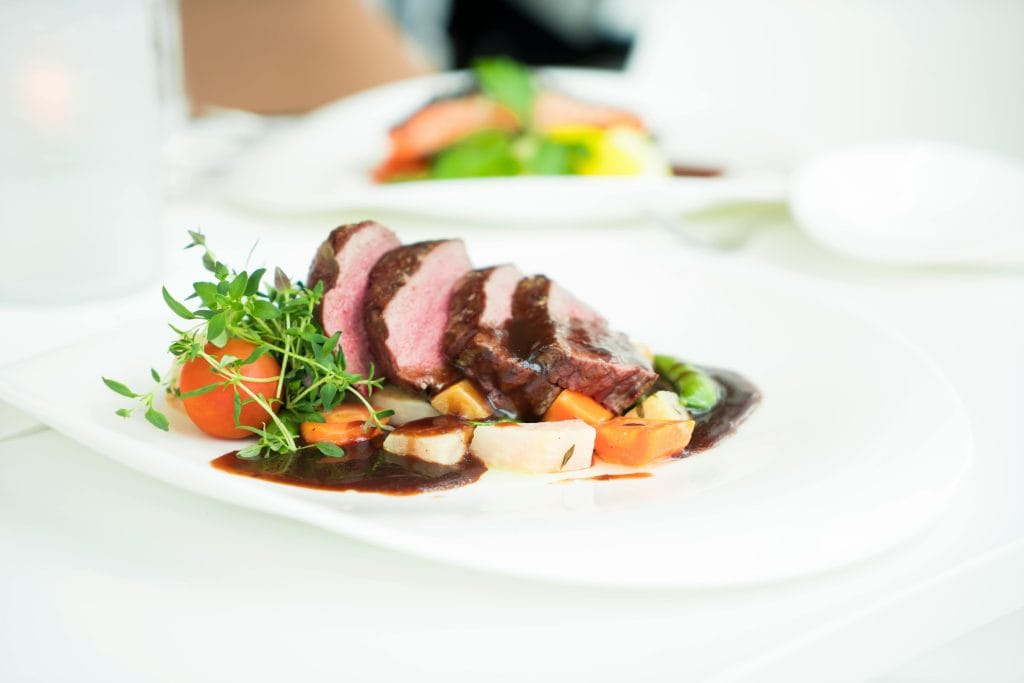
Let’s Make Family Dinner Something You Look Forward To
I started my blog to show mature women that clean eating doesn’t have to be complicated, expensive, or rigid. This meal plan is proof of that. Each of these five dinners is something I would — and do — make in my own kitchen in South Carolina on a regular weeknight.
The meals rotate proteins, so you’re never bored. The vegetables are flexible because real life means working with what’s in the fridge. And the 500-to-700 calorie range gives you wiggle room for the realities of a busy family.
You’ve got this. And dinner is going to be delicious. And if you want to check out some desserts – check out my article: Sweet & Clean: 9 Clean Eating Desserts That Taste Amazing