The 80/20 Rule for Clean Eating: How to Eat Clean Without Being Perfect

Introduction
Here’s something I used to believe with my whole chest: if I wasn’t eating perfectly, I wasn’t eating clean. One cookie at a work meeting? Day ruined. A slice of birthday cake at my nephew’s party? Might as well order pizza for dinner because I’d already blown it. I spent years in that exhausting cycle — eating perfectly for a week or two, slipping up once, deciding I’d failed, and going completely off the rails until I worked up the motivation to start over. Sound familiar?
The research backs up how common this is. Studies on eating behavior consistently show that rigid, perfectionistic approaches to healthy eating are among the strongest predictors of eventual dietary abandonment. In other words, trying too hard to be perfect is literally one of the main reasons people quit eating clean. The very thing most people think will make them successful — strict adherence — is often what causes them to fail.
That’s where the 80/20 rule comes in, and honestly, it changed everything for me. Not just how I eat, but how I think about eating. The 80/20 rule is the single most liberating concept in clean eating, and I’d argue it’s the only rule you truly need to make this lifestyle work long-term. In this guide, I’m going to break down exactly what the 80/20 rule is, how it works in real life, what goes in each half of the split, and how to apply it even when life gets messy. Because life always gets messy. And your eating approach needs to be able to handle that without falling apart. Let’s get into it.
What Is the 80/20 Rule for Clean Eating?
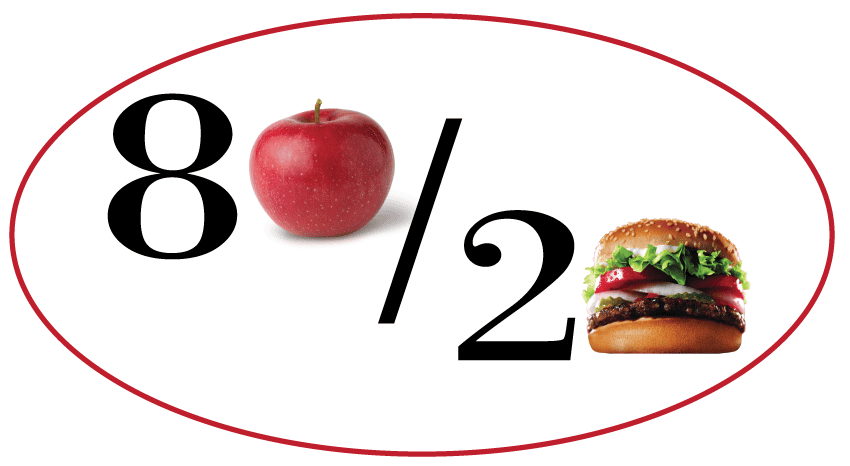
The 80/20 rule for clean eating is beautifully simple: eat whole, clean, nourishing foods about 80% of the time, and allow yourself flexibility and enjoyment for the remaining 20%. That’s the whole concept. No complicated formula, no tracking app required, no guilt attached to either side of the equation.
In practical terms, if you eat roughly three meals a day plus a snack or two, that’s approximately 35 eating occasions per week. Eighty percent of 35 is 28. So you’re aiming for about 28 clean-eating choices per week, with around 7 occasions where you eat whatever sounds good without analysis or stress. That works out to roughly one flexible meal per day, or a few bigger indulgences spread across the week. When you do the math like that, it’s honestly not that restrictive at all.
The concept itself draws loosely from the Pareto principle — the economic observation that roughly 80% of outcomes come from 20% of causes — applied here to the idea that the vast majority of your health results will come from your consistent clean eating habits, with a smaller portion of flexibility having minimal negative impact on those outcomes. You don’t have to be a perfect, clean eater to get excellent health results. You just have to be a mostly consistent one.
Here’s what I really want you to understand about the 80/20 rule: it is not a cheat system. The word “cheat” implies that you’re breaking the rules, doing something wrong, sneaking something you shouldn’t have. The 20% in this framework is not cheating. It’s a completely intentional, built-in, fully sanctioned part of the plan. You’re not breaking your clean eating approach when you use your 20%. You’re following it exactly as designed. That distinction might seem small, but it changes everything about how those moments feel psychologically.

Why Perfectionism Is the #1 Reason Clean Eating Fails
Let me tell you about a pattern I’ve watched play out dozens of times — in my own life and in the lives of friends and readers who’ve shared their stories with me. Someone gets excited about clean eating. They go all in. For a week or two, maybe even three, they’re eating beautifully. Vegetables at every meal, no processed snacks, meal prepping on Sundays, feeling fantastic. And then something happens. A stressful day at work, a social event with food they didn’t prepare, a moment of genuine hunger with nothing clean available. They eat something that doesn’t fit their perfect clean-eating vision. And instead of shrugging it off, they spiral.
Psychologists actually have a name for this spiral: the “what the hell” effect. It’s the phenomenon where a single deviation from a dietary plan triggers the thought “what the hell, I’ve already blown it” — followed by abandoning the plan entirely, often accompanied by eating significantly more of the “forbidden” food than they would have if they’d just had a small amount without the guilt attached. The restriction creates the binge. Perfectionism creates failure. And then the person concludes that they “just can’t eat clean” — when really, the problem was the approach, not the person.
Food perfectionism carries a real emotional cost that doesn’t get talked about enough. When every meal is a moral test — when eating a piece of bread makes you feel like you have poor character and eating a salad makes you feel virtuous — you’ve developed a relationship with food that is genuinely unhealthy, regardless of what’s on your plate. The constant mental calculation, the guilt after imperfect choices, the anxiety around social eating situations — these are signs that a “healthy” eating approach has become something other than healthy.
The 80/20 rule removes the failure state entirely. When there is no “perfect,” there is no “I’ve ruined it.” There’s just this week’s balance, which is always recoverable. A rough day of eating just becomes a day when you used more of your 20% than usual — not a reason to abandon everything and start over on Monday. That reframe is genuinely life-changing for people who’ve been trapped in the perfection cycle for years.
The Science Behind Why 80/20 Works
I know some people need more than “it just feels better” to trust a new approach — so let’s talk about what the research actually says about flexibility in eating habits, because it’s pretty compelling.
Studies on habit formation consistently show that all-or-nothing thinking is one of the strongest predictors of habit failure. When people hold themselves to an impossibly high standard, any deviation feels catastrophic, triggering abandonment of the habit entirely. In contrast, people who build in planned flexibility from the start show significantly better long-term adherence to health behavior changes. The flexibility isn’t a weakness in the approach — it’s a structural feature that makes the habit durable.
Research on dietary patterns and long-term weight management tells a similar story. Studies that compare flexible versus rigid dietary control consistently find that flexible restraint — allowing for occasional indulgences within an otherwise healthy eating pattern — is associated with better long-term weight outcomes, lower rates of binge eating, and significantly better psychological well-being around food. Rigid restraint, on the other hand, is associated with higher rates of binge eating, greater food preoccupation, and more frequent cycles of restriction and overeating. The science really does support eating the 20%.
There’s also meaningful research on the role of consistency versus perfection in health outcomes. A person who eats clean 80% of the time, consistently, for two years will have dramatically better health outcomes than someone who eats perfectly for three weeks and then abandons clean eating entirely. Duration and consistency matter far more than perfection. Your body doesn’t need you to be a perfect eater. It needs you to be a reliably good one, most of the time, for a long time. The 80/20 rule is designed to make that possible.
What Does the 80% Look Like? (Clean Eating in Practice)
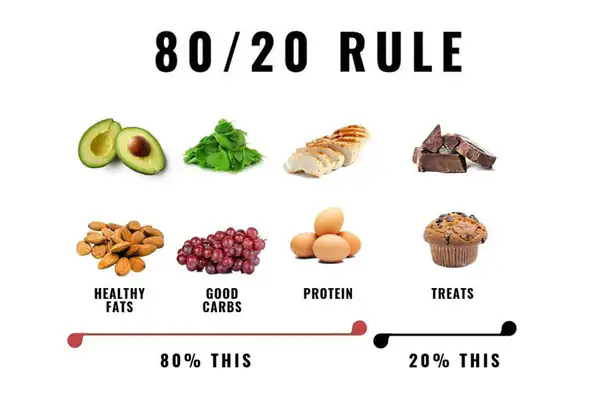
The 80% is where most of your meals live, and it’s genuinely delicious — I want to push back hard on any mental image you might have of sad, flavorless “health food” dominating your week. Clean eating is real food, and real food is satisfying, flavorful, and varied. If weeknight dinners are the part of your 80% that feels hardest to keep up, my Clean & Lean: 5 Nights of Protein-Packed Dinners guide walks through five simple, satisfying dinners that make hitting your clean eating majority a lot more automatic.
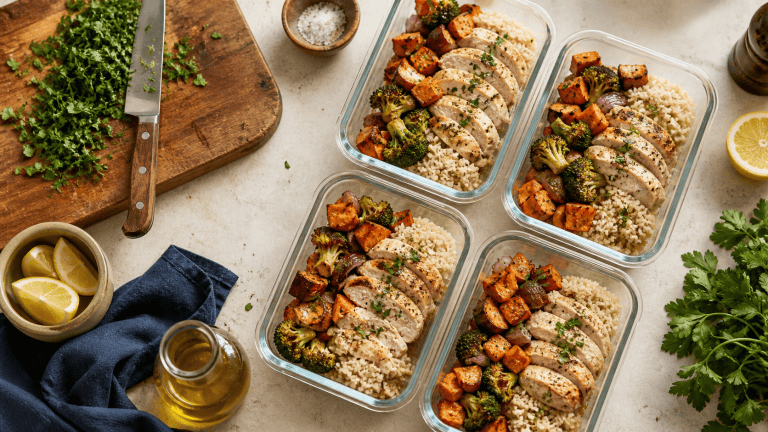
For the 80%, you’re choosing whole, minimally processed foods that nourish your body and keep you feeling energized and satisfied. This means building your meals around quality protein sources — eggs, chicken, salmon, tuna, turkey, Greek yogurt, cottage cheese, legumes — combined with plenty of vegetables and fruits, whole grains like oats, quinoa, brown rice, and whole grain bread, and healthy fats from avocados, olive oil, nuts, and seeds. These are the building blocks of your clean-eating majority.
A clean eating day within your 80% might look something like this: scrambled eggs with spinach and avocado on whole grain toast for breakfast. A big salad with grilled chicken, chickpeas, cucumber, cherry tomatoes, and olive oil lemon dressing for lunch. An apple with almond butter as an afternoon snack. Baked salmon with roasted sweet potato and broccoli for dinner. That’s a genuinely satisfying, varied, delicious day of eating — and it doesn’t require a culinary degree or a four-hour meal prep session to pull off.
The mindset behind the 80% is important too. These meals aren’t punishment. They’re not what you eat while waiting to get to your 20%. They’re genuinely good food that makes you feel good — energized, clear-headed, satisfied, and well-nourished. When you start approaching the 80% as nourishment rather than restriction, the whole framework shifts from feeling like a diet to feeling like genuine self-care. That shift takes time but it absolutely happens, and it’s one of the most rewarding parts of making clean eating a real lifestyle.
What Does the 20% Look Like? (Real Life in Practice)
This is the part people get most curious about — and honestly, a little confused about — so let me be really specific. The 20% is for enjoyment, flexibility, and real life. It is not a green light for a weekly junk food marathon.
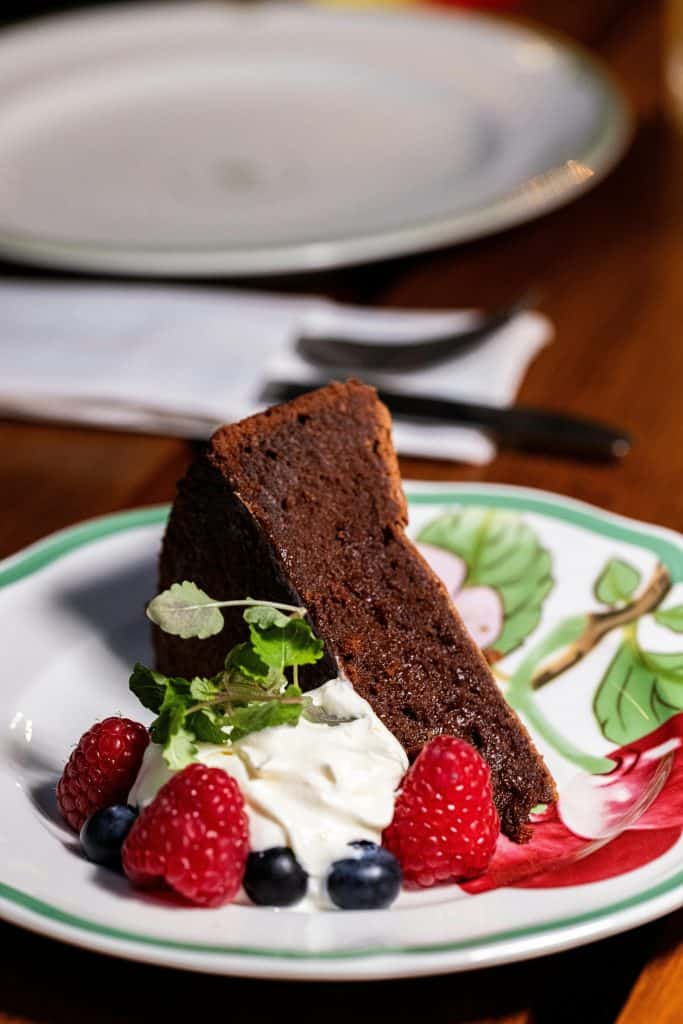
Real-life examples of what typically goes in the 20%: a slice of birthday cake at a celebration, the restaurant pasta dish you’ve been craving, a glass of wine with dinner, movie theater popcorn, your grandmother’s famous casserole at a family dinner, the office donuts someone brought in, a spontaneous ice cream cone on a summer evening, the nachos at a sports bar with friends. These are normal, human, joyful food experiences that have nothing to do with failing at clean eating and everything to do with living a full, connected life.
Notice what’s on that list: real moments, real occasions, real food with real meaning attached. The 20% works best when it’s genuinely enjoyable and intentional — when you’re eating something because you actually want it and you’re savoring it, not because you’re stress-eating mindlessly at 10 PM. There’s a meaningful difference between a conscious, enjoyed indulgence and a guilt-driven binge, and that difference matters for both your physical and mental health.
What the 20% is NOT, and this is important: it’s not permission to eat processed food at every meal and round up to “close enough.” It’s not a weekly planned binge. It’s not an excuse to keep highly problematic foods stocked at all times “for the 20%.” And it’s not something to feel guilty about, justify, or explain to anyone. It’s simply the flexibility built into your lifestyle that makes it sustainable. Use it wisely, enjoy it genuinely, and don’t overthink it.
The most common mistake I see beginners make with the 20% is letting it quietly expand over time. Life gets busier. A stressful season hits. The 20% starts happening daily instead of weekly. Before lon,g the ratio has flipped, and clean eating has essentially stopped. This isn’t a moral failure — it’s a natural drift that happens to everyone. The fix is simply to notice it without judgment and reorient. One good clean eating week resets the compass.

How to Calculate Your 80/20 Split in Real Life
Here’s where people tend to overthink things, and I want to save you from that. The 80/20 split doesn’t require a spreadsheet, a tracking app, or a calculator that you check after every meal. It’s a framework, not a scoring system.
That said, it helps to have a general sense of what 80/20 looks like in numbers, so you have something concrete to work from. Let’s do some quick math. If you eat three meals a day, that’s 21 meals per week. Add two snacks per day, and you’re at 35 eating occasions per week. Eighty percent of 35 is 28 clean choices, leaving 7 flexible ones. Even if you only count main meals — 21 per week — your 80% target is about 17 clean meals and 4 flexible ones.
I personally think the weekly view is the most forgiving and most accurate way to look at your 80/20 balance. A daily view creates pressure — if you use your flexibility at lunch, does that mean dinner has to be perfect? Weekly thinking is more relaxed and realistic. A rough Wednesday where everything went sideways, and dinner was fast food, doesn’t ruin your week. You’ve still got six other days to make mostly clean choices, and the overall balance will be just fine.
For non-app tracking, I love the simple tally method: at the end of each day, make a mental note of whether your eating was mostly clean, somewhat mixed, or mostly flexible. You don’t need precision. You need a general awareness that keeps you honest without creating obsession. If you’ve had three mostly-flexible days in a row, that’s useful information — not a reason for shame, just a gentle signal to recommit to your 80% for the next few days.
80/20 Rule vs. Cheat Days — What’s the Difference?
A lot of people hear “80/20” and immediately think “oh, like a cheat day.” But these two concepts are actually quite different, and the differences matter more than they might seem at first.
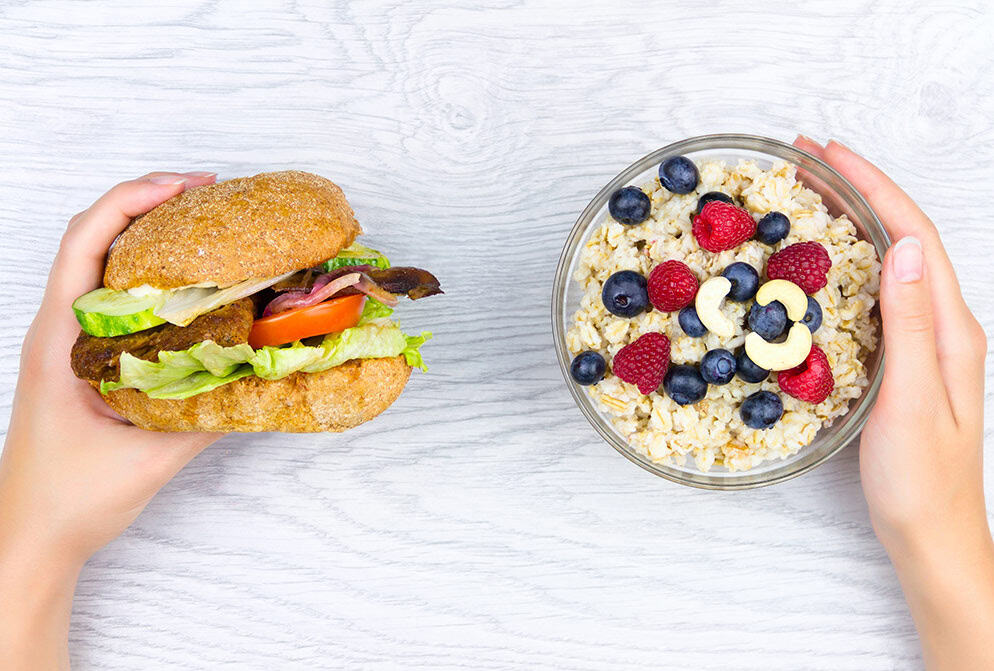
Cheat days come from traditional diet culture. The framework goes like this: you follow your diet perfectly for six days, and on the seventh day you eat whatever you want — usually a lot of it — as a reward for your compliance. The problem with this structure is that it’s built entirely on diet mentality. It reinforces the idea that most food is something you have to suffer through and occasionally get a break from. The word “cheat” implies wrongdoing, rule-breaking, something you’re getting away with. And psychologically, that framing tends to trigger overconsumption — because if you only get one day of freedom per week, there’s enormous pressure to make the most of it, which often looks like eating way past the point of genuine enjoyment.
The 80/20 rule distributes flexibility evenly throughout the week rather than concentrating it into a single high-stakes day. There’s no “cheat day” to wait for, no reward to earn, no rules to break. There’s just the ongoing rhythm of mostly clean choices with regular, guilt-free flexibility woven in. That rhythm feels completely different from cheat day culture — calmer, more sustainable, and far less likely to trigger the binge-restrict cycle.
The language makes a real difference, too. Saying “I’m cheating” frames a food choice as a moral transgression. Saying “this is my 20%” frames the same choice as a planned, normal part of your lifestyle. One creates guilt. The other creates peace. You are not cheating on clean eating when you eat pizza with your family on Friday night. You are living your life, which was always the point.
How to Apply the 80/20 Rule to Real Life Situations
This is where the rubber meets the road, because clean eating doesn’t happen in a controlled lab environment. It happens at birthday parties, work lunches, holiday dinners, vacation meals, exhausted Tuesday nights, and every other complicated real-life context you can think of. Here’s how the 80/20 rule navigates all of it.
At restaurants and social events: Use your general clean-eating awareness to make a reasonably clean choice most of the time — grilled protein, vegetables, whole grain options when available. But don’t stress about being perfect. If the restaurant is known for a specific dish you love, order it. If there’s a special occasion, enjoy it. Assess whether this meal is part of your 80% or your 20% and move on without analysis. Most restaurant meals, if you make thoughtful choices, land somewhere in the middle — not perfectly clean but not really in the 20% either. That’s fine.
With picky eaters and family meals: The 80/20 rule is actually wonderful for families because it removes the all-or-nothing pressure from shared meals. Serve a clean dinner five nights a week and order pizza or do taco night on the other two. That’s already an 80/20 ratio, and it takes the pressure off everyone at the table.
When you’re tired, stressed, or busy: This is when clean eating is hardest, and it’s when your meal prep pays off. If you have clean food already prepared, you’re far less likely to default to processed options when your energy is low. On the days when you genuinely don’t have anything prepped, and life has completely gotten away from you — that’s a reasonable use of your 20%. Order the reasonably okay takeout, eat it without guilt, and plan a simple, clean meal for tomorrow.
During back-to-school season: September has a way of throwing every routine into the air at once — new schedules, school lunches to pack, after-school sports and activities, and the general chaos of everyone relearning how to be places on time. This is exactly the kind of stretch where perfectionism sets people up to fail. You don’t need a perfectly clean lunchbox every single day or a home-cooked dinner every night during the first hectic weeks of the school year. Pack what you can, lean on simple staples like fruit, yogurt, and whole grain sandwiches for the 80%, and let the occasional cafeteria pizza day or drive-through dinner after a late practice be exactly what it is — part of your 20%, not a sign that the wheels have come off. The families who make it through September with their clean eating intact aren’t the ones who never slip. They’re the ones who don’t treat a hectic Tuesday as a reason to give up on Wednesday.
If you’re navigating this season alongside your own midlife changes — energy dips, a slower metabolism, or just less patience for complicated meal prep — my Clean Eating for Beginners Over 40 guide is a good next stop.
During holidays and special occasions: Holidays are specifically what the 20% was made for. Thanksgiving, Christmas dinner, your best friend’s wedding — these are exactly the occasions where flexibility belongs. Enjoy the meal fully, without tracking or guilt, and return to your clean eating rhythm the next day. One holiday meal doesn’t derail a lifestyle. What derails a lifestyle is letting the holiday stretch into two weeks of abandoning all clean eating principles.
And with fall officially here, it’s worth naming the season that’s coming: from Halloween candy in the house through Thanksgiving dinner and the entire December stretch, this is genuinely the hardest quarter of the year to hold onto the 80/20 rhythm. That’s normal, and it’s exactly why the weekly view matters more than ever during these months. A Halloween party doesn’t need to become a week of candy for breakfast. A big Thanksgiving plate doesn’t need to become a guilt spiral that derails you through New Year’s. Treat each holiday gathering as its own single occasion within your 20%, let it be fully enjoyed, and let your very next meal be a completely ordinary, clean one. You don’t need a January reset if you never fully abandoned the framework in November and December to begin with.
Common 80/20 Mistakes Beginners Make (And How to Fix Them)
I’ve made every one of these mistakes myself, so consider this the shortcut I wish I’d had.
Letting the 20% creep to 40% or 50%. This is the most common one, and it happens gradually, usually during a stressful or busy season. The fix is simple: do a gentle weekly check-in. Not a punishing audit — just a quiet “how did this week go, roughly?” If it wasn’t close to 80/20, you know to recommit next week. No drama, no restart required.
Using the 20% as permission to binge. The 20% works best when the enjoyment is genuine and intentional — savoring a food you really wanted, not eating an entire bag of chips because “it’s my 20%.” If you notice the 20% always involves overeating past the point of actual enjoyment, that’s worth paying attention to. It might signal restriction in the 80% that’s too tight and creates rebound eating.
Being too rigid about what counts as “clean” for the 80%. Some people apply such strict standards to their 80% that even foods like canned beans, frozen vegetables, or natural nut butters don’t qualify. That level of rigidity makes the 80% exhausting to maintain and sets up the all-or-nothing spiral. Keep your clean eating standards practical and sustainable, not perfect.
Tracking obsessively and creating new anxiety. The 80/20 rule is supposed to reduce food stress, not replace calorie tracking with a different kind of tracking obsession. If you’re logging every meal and calculating percentages to the decimal point, you’ve missed the spirit of the approach entirely. It’s a rough guideline. Rough is the point.
Giving up entirely after a rough week. Sometimes life absolutely wrecks your 80/20 ratio for a week — illness, travel, family crisis, pure overwhelming stress. That happens. It’s okay. The 80/20 rule is a weekly rhythm, not a once-broken-forever-ruined system. Next week is always a fresh start. The fact that you know what your clean eating looks like means you can always return to it.
How the 80/20 Rule Supports a Healthy Mindset Around Food
I think this might be the most underappreciated benefit of the 80/20 rule — not what it does for your body, but what it does for your mind. For people who’ve spent years in diet culture, the shift that 80/20 creates in their relationship with food is genuinely profound.
Diet culture operates on the idea that food is either good or bad, and by extension, you are either good or bad for eating it. This thinking is the source of an enormous amount of unnecessary suffering around food. It creates obsession, anxiety, guilt cycles, and a distorted relationship with hunger and eating that can persist for years. The 80/20 rule dismantles that binary completely. There is no “bad” food in a framework where all food has a place — some foods belong in the 80%, and some in the 20%, and both are completely valid.

When you genuinely internalize the 80/20 rule, something interesting happens to your relationship with the 20% foods. They lose their power over you. When chocolate cake is not forbidden — when it’s simply something that lives in your 20%, and you can have it whenever it genuinely fits there — you stop thinking about it obsessively. You stop eating it frantically, as you might never see it again. You can have a slice, enjoy it, and move on without it consuming your mental space for the rest of the day. That is food freedom, and it’s one of the most meaningful benefits of this approach.
For people with a history of disordered eating or a complicated relationship with food, the 80/20 rule’s built-in flexibility makes it more compatible with recovery than rigid dietary frameworks. That said — and I want to be clear about this — any significant changes to your eating patterns should involve a conversation with a healthcare provider or registered dietitian if you have a history of disordered eating. Your mental health around food is just as important as the food itself.
80/20 Rule for Clean Eating FAQs
Is the 80/20 rule the same as the Pareto principle?
The 80/20 rule for clean eating draws loosely from the Pareto principle — the economic observation that 80% of outcomes come from 20% of inputs — but it’s not a direct application of it. It’s more of a philosophical borrowing: the idea that the majority of your health outcomes will come from consistent clean eating habits, with a smaller portion of flexibility having minimal negative impact. The name stuck because the ratio happens to work well for sustainable clean eating.
Can you lose weight with the 80/20 eating rule?
Yes, many people do — and often more sustainably than with restrictive dieting. When your 80% consists of whole, nutrient-dense foods that naturally support satiety and blood sugar stability, your overall calorie intake often decreases organically without deliberate restriction. Weight loss with 80/20 tends to be gradual and lasting because it’s produced by genuine habit change rather than temporary deprivation.
How strict does the 80% need to be?
Pretty clean — but not obsessively so. Your 80% should consist primarily of whole, minimally processed foods: vegetables, fruits, quality proteins, whole grains, and healthy fats. You don’t need to buy everything organic, make everything from scratch, or eliminate every trace of sodium or natural sweetener. Practical clean eating counts. Perfect clean eating isn’t required or even the goal
What if I have a bad week and my ratio flips?
It happens to everyone. A rough week where your ratio looks more like 50/50 or even 40/60 is not a failure — it’s a human week during a hard stretch. You don’t need to punish yourself or do a cleanse to compensate. You just return to your clean eating rhythm the following week. The lifestyle absorbs rough patches because it’s built for real life, not ideal conditions.
Is the 80/20 rule appropriate for everyone?
For most generally healthy people looking to improve their eating habits sustainably, yes — the 80/20 rule is a wonderfully practical framework. However, if you have specific medical conditions that require careful dietary management (diabetes, celiac disease, kidney disease, etc.), or a history of eating disorders, you should work with a healthcare provider or registered dietitian to determine what flexibility looks like for your specific situation. The general principle of flexibility over perfectionism still applies, but the specific parameters may need to be personalized.
Conclusion
Let’s bring it all together. The 80/20 rule for clean eating is simple: nourish your body with whole, real foods about 80% of the time, and give yourself genuine, guilt-free flexibility for the other 20%. No forbidden foods. No failure states. No Monday restarts. Just a sustainable rhythm of mostly clean, consistently practiced, over a lifetime — and a built-in grace for all the beautiful, messy, unpredictable moments that make up a real human life.
Here’s the truth I want you to hold onto: imperfect clean eating practiced consistently will always beat perfect clean eating practiced occasionally. Always. Your body doesn’t need you to eat flawlessly. It needs you to eat well, most of the time, for a long time. The 80/20 rule is the framework that makes that possible — for real people, with real lives, real families, real social calendars, and real moments of just really wanting a piece of cake.
You don’t have to earn your 20%. You don’t have to justify it or feel guilty about it or compensate for it. It belongs to your lifestyle just as much as clean eating does. Use it with intention, enjoy it genuinely, and then return to your 80% without drama or self-judgment. That rhythm — practiced over weeks, months, and years — is what a genuine clean eating lifestyle actually looks and feels like from the inside.