The Clean 15 and Dirty Dozen: Your Smart Guide to Buying Produce in 2026

Introduction
Eating fruits and vegetables is essential for a healthy diet. But here’s a question I hear all the time: Do I really need to buy everything organic? The answer is no, and I’m going to show you exactly how to shop smarter without breaking the bank by reviewing the Clean 15 Dirty Dozen list.
The Environmental Working Group (EWG) publishes an annual Shoppers’ Guide to Pesticides in Produce that ranks fruits and vegetables by pesticide residue levels. This guide has changed how I shop, and it can help you make informed decisions at the grocery store, too. They annually update their list in March/April. Visit EWG at https://www.ewg.org/foodnews/dirty-dozen.php
What Are the Dirty Dozen and Clean 15?
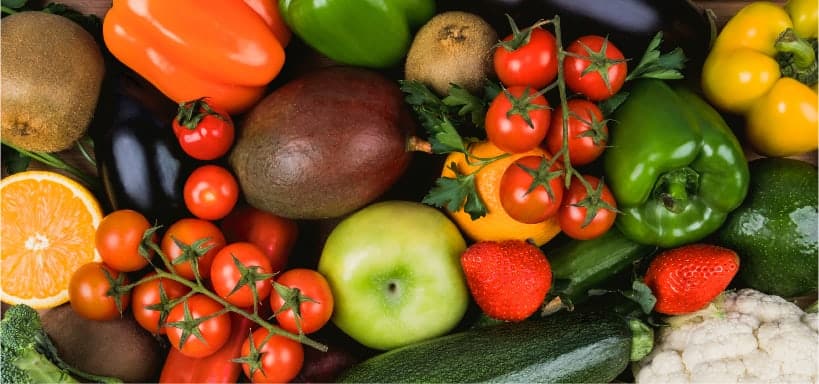
The Dirty Dozen are the 12 fruits and vegetables with the highest pesticide residues when tested by the EWG. These are the ones worth buying organic if your budget allows it.
The Clean 15 are the produce items with the lowest pesticide residues. You can safely buy these conventional and save your money for the Dirty Dozen organics.
I learned about this guide five years ago, and it completely changed my grocery shopping strategy. Instead of feeling guilty about not buying all organic or overwhelmed by the price difference, I now have a clear system that works with my budget.
Why Some Produce Has More Pesticides
You might wonder why strawberries have higher pesticide levels than avocados. It comes down to a few factors:
Skin thickness matters. Fruits and vegetables with thin or edible skins, such as berries and leafy greens, tend to absorb more pesticides. Thick-skinned fruits like pineapples and bananas protect the flesh inside.
Growing conditions differ. Some crops require more pest control than others. Strawberries, for example, are delicate and prone to pests, so conventional farmers use more pesticides.
Testing methods are standardized. The EWG tests produce after it’s been washed, so these residue levels reflect what you’re actually eating, not what’s on the outside.
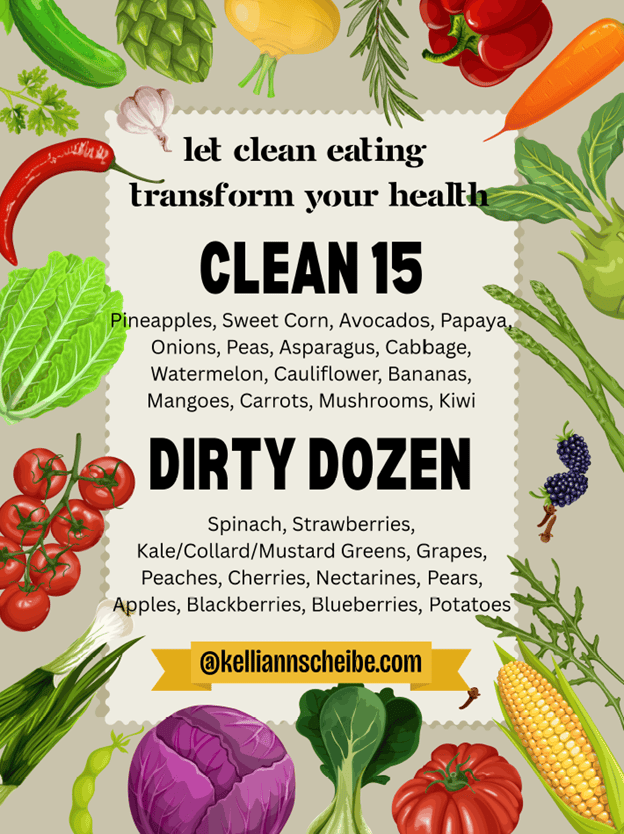
The 2025 Dirty Dozen List
These are the fruits and vegetables I always buy organic:
- Spinach
- Strawberries
- Kale, collard, and mustard greens
- Grapes
- Peaches
- Cherries
- Nectarines
- Pears
- Apples
- Blackberries
- Blueberries
- Potatoes
Notice that most of these have thin skins or are leafy greens.
The 2025 Clean 15 List
These are perfectly fine to buy conventional:
- Pineapples
- Sweet corn
- Avocados
- Papaya
- Onions
- Sweet peas (frozen)
- Asparagus
- Cabbage
- Watermelon
- Cauliflower
- Bananas
- Mangoes
- Carrots
- Mushrooms
- Kiwi
I save money buying conventional avocados and bananas. Those savings go toward organic berries and greens instead.
My Budget-Friendly Shopping Strategy
Here’s how I use this guide in real life:
Start with the Dirty Dozen. I prioritize buying these organic, especially the ones my family eats most often. We eat a lot of spinach and apples, so those are always organic in my cart.
Buy Clean 15 conventional. I never worry about buying regular bananas, onions, or avocados. The savings add up quickly.
Shop seasonal and local. Farmers’ markets often have organic produce at better prices than grocery stores. I can usually find organic strawberries cheaper at my local market in summer.
Consider frozen organic. Frozen organic berries and spinach cost less than fresh and work great for smoothies and cooking. I always keep a bag of frozen organic blueberries in my freezer.
Wash everything well. Even organic produce can have dirt and bacteria. I rinse all produce under running water, and for items like berries, I use a vinegar soak (one part vinegar to three parts water).
Common Questions I Get About This Guide
Does organic mean pesticide-free? No, organic farmers can use certain approved pesticides, but they’re generally less toxic and used in smaller amounts than conventional pesticides.
Should I avoid the Dirty Dozen if I can’t buy organic? Absolutely not. Eating conventional fruits and vegetables is still better than not eating them at all. The health benefits of produce outweigh the pesticide concerns.
Does washing remove pesticides? Washing helps but doesn’t eliminate all residues, especially those absorbed into the produce. This is why choosing organic for the Dirty Dozen matters.
How often does this list change? The EWG updates it annually based on new testing data. Some items stay consistent year after year, while others move up or down the list.
Making This Work for Your Clean Eating Journey
The beauty of the Clean 15 and Dirty Dozen guide is that it takes the guesswork out of produce shopping. You don’t need to be perfect. You just need a system that works for you.
I’ve included a free printable PDF guide at the end of this article that you can download and keep in your wallet or on your phone. Take it to the store and reference it until you memorize your favorites.
Remember, clean eating is about progress, not perfection. If you can only afford to buy a few organic items, start with the Dirty Dozen produce your family eats most often. Every small choice adds up to better health.
The goal isn’t to stress about every purchase. It’s to make informed decisions that fit your budget and support your health goals. That’s what clean eating is really about. The Clean Eating Revolution – Transform Your Life in 2025