How to Make Clean Eating Smoothies (Recipes, Formulas & My Honest Picks)

Introduction
Here’s where I messed up for years—I thought if I threw fruit in a blender, it automatically became a health drink. Nope! My early clean-eating smoothie attempts were basically fruit bombs with maybe some yogurt thrown in. A banana, two cups of berries, juice as the liquid, and some honey for “sweetness.” Looking back, that smoothie probably had 60+ grams of sugar, even though it was all “natural” sugar.
The formula I use now is completely different, and honestly, my smoothies keep me full for hours instead of leaving me hungry thirty minutes later. Here’s what actually works: one serving of fruit (usually half a banana and a cup of berries), a big handful of leafy greens like spinach or kale, healthy fats from avocado or nut butter, protein from plain Greek yogurt or clean protein powder, and unsweetened almond milk or coconut water as the liquid. Once you have the formula down, you can mix and match every single day and never get bored.
That ratio keeps the sugar reasonable—usually under 15 grams total—and gives you fiber, protein, and healthy fats that actually satisfy you. The greens sound weird in a smoothie, I know, but you literally cannot taste spinach when it’s blended with berries. I promise. I’ve converted so many skeptics with this trick.
In this article, I’ll walk you through everything — the basic clean smoothie formula, how to use protein powder (and which kind is best for you), my honest take on store-bought smoothies, and some recipes you can start making this week.
Let’s blend.
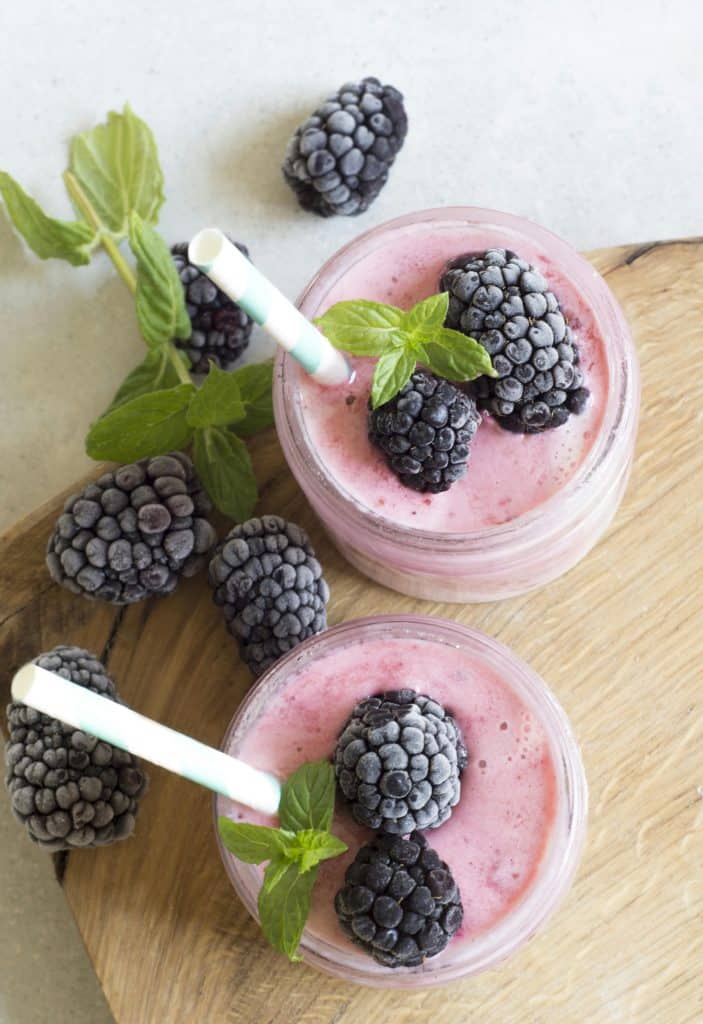
What Makes a Smoothie ‘Clean’?
Before we get to recipes, let’s talk about what clean eating means in a smoothie. Clean eating is about choosing whole, minimally processed foods and knowing what’s in what you’re eating. For smoothies, that means:
- A liquid base that’s unsweetened — think water, unsweetened almond milk, cow’s milk, or coconut milk or water
- Protein from a clean source — whole food (yogurt, tofu) or a quality powder with a short ingredient list
- Healthy fats — like nut butter, frozen avocado, or chia or flax seeds
- Carbs/Fiber – fruits and vegetables — fresh or frozen with no added sugar or syrups
- No fake sweeteners, artificial flavors, or mystery ‘proprietary blends.’
- Optional Flavor enhancers – cinnamon, vanilla extract, cacao powder, fresh ginger, sea salt, drizzle of honey
Clean smoothies are not diet smoothies. They are not about restriction. They are about giving your body real food in a form that’s quick, delicious, and easy to digest. I follow an 80/20 approach to clean eating — meaning I aim for clean choices most of the time without being rigid. Smoothies are one of the easiest ways to be 100% clean without any sacrifice.
The Clean Eating Smoothie Formula (Start Here)
This is the foundation of every smoothie I make. Print this out, save it to your phone — whatever works for you. Once you know the formula, you won’t need a recipe.
The Basic Clean Smoothie Formula:
- 1 cup liquid base (unsweetened almond milk, cow’s milk, coconut milk or water, or plain water)
- 1–2 cups leafy greens (optional but powerful — spinach, kale, arugula, zucchini)
- 1 cup fruit (fresh or frozen — banana, berries, mango, peach)
- 1 serving protein 15-30g (protein powder, Greek yogurt, or hemp seeds)
- 1-2 Tablespoons healthy fat (nut butter, chia seeds, flax seeds, or avocado)
- Flavor enhancer: cinnamon, vanilla extract, cacao powder, ginger
Blend the liquid first, then add the greens, then the fruit, and other ingredients. This order protects your blender blade and gives you a smoother texture.
Featured Snippet Target: Format the above as a numbered list with the H2 ‘The Clean Eating Smoothie Formula’ — this structure is ideal for Google’s ‘how to’ featured snippet.
Clean Eating Protein Smoothies: Whey vs. Pea Protein vs. Bone Broth Protein
Protein powder is one of the most common questions I get. There are so many options on the shelf, and the labels can feel overwhelming. This is where things get really tricky because the supplement industry is basically the Wild West. The FDA doesn’t regulate these products the same way they regulate food, so companies can get away with putting all kinds of garbage in them. These days, I look for protein powders with really short ingredient lists. Like, five ingredients or less. My current favorite is an unflavored grass-fed whey protein that literally has one ingredient: whey protein isolate from grass-fed cows. That’s it: no sweeteners, no flavors, no fillers. If you can’t do dairy, there are clean plant-based options too, but you gotta be even more careful. A lot of vegan protein powders use pea protein, rice protein, or hemp protein, which are fine, but beware, they often load them up with gums, thickeners, and artificial sweeteners to improve the texture and taste.
Let me break down the three most popular clean options so you can decide what works best for your body and your goals.
Whey Protein
Whey protein is derived from cow’s milk — it’s a byproduct of the cheese-making process. It’s one of the most studied proteins available and is considered a ‘complete protein,’ meaning it contains all nine essential amino acids.
Best for:
- Post-workout muscle recovery
- People who tolerate dairy well
- Those looking for a creamy, thick, smoothie texture
What to look for:
- Whey isolate (not concentrate) for less lactose
- Short ingredient list — ideally 5 ingredients or fewer
- No artificial sweeteners (avoid aspartame, sucralose, acesulfame-K)
- Third-party tested: look for NSF Certified for Sport or Informed Sport seals
Note: If you are sensitive to dairy or follow a plant-based diet, whey is not the right fit. Skip to pea protein or collagen below.
Pea Protein
Pea protein is made from yellow split peas and has become my top recommendation for most people. It’s plant-based, dairy-free, and remarkably easy on the digestive system. It’s also high in iron and contains a solid amino acid profile — though it’s slightly lower in methionine, so pairing it with hemp seeds or rice protein rounds it out nicely.
Best for:
- Plant-based and vegan diets
- Anyone with dairy or egg sensitivities
- People looking for a neutral flavor that doesn’t overpower their smoothie
What to look for:
- Pea protein isolate as the first (or only) ingredient
- Minimal sweetener — organic stevia or monk fruit at most
- No fillers, gums, or artificial flavors
Find a pea protein that uses the peas (not the shells), such as Truvani. It blends smoothly and does not have the chalky texture some people associate with older plant proteins. It is genuinely one of the cleanest options available right now. https://shop.truvani.com/pages/plant-based-protein
Bone Broth Protein
Bone broth protein is one of the newer additions to the clean protein space, and it deserves more attention than it gets. It’s made by dehydrating the liquid from slow-simmered animal bones — typically beef or chicken — into a concentrated powder. The result is a protein source that carries the same gut-supporting, joint-nourishing benefits you’d get from a cup of warm bone broth, in a form that blends right into your morning smoothie.
What I appreciate most about bone broth protein from a clean eating standpoint is the sourcing story. When you choose a quality brand (my current favorite is Paleo Valley), you know exactly what you’re getting: protein from pasture-raised or grass-fed animals, with naturally occurring glycine, proline, and other amino acids that support gut lining integrity. For those of us who pay attention to where our food comes from, this matters. https://paleovalley.com/store/grass-fed-bone-broth-protein
Best for:
- Gut health support — bone broth protein is rich in glycine and glutamine, both of which support the gut lining
- Joint and connective tissue support
- Those following Paleo, keto, or ancestral eating approaches
- Anyone looking for a whole-food-based protein that goes beyond muscle recovery
What to look for:
- Grass-fed or pasture-raised source — this affects nutrient quality and clean eating integrity
- Short ingredient list — pure bone broth protein should have minimal additives
- No artificial sweeteners, flavors, or fillers
- Chicken bone broth protein tends to be milder in flavor than beef for smoothies
A note on amino acid profile: like collagen, bone broth protein is not a complete protein because it is low in tryptophan and some other essential amino acids. If you’re using it as your primary protein source, pair your smoothie with a whole food that fills those gaps — hemp seeds, Greek yogurt (if dairy works for you), or a complementary plant-based food throughout the day.
Quick Comparison Summary:
| Protein Type | Best For | Complete Protein? | Vegan? |
| Whey | Post-workout, dairy-tolerant | Yes | No |
| Pea | Plant-based, sensitive digestion | Nearly (pair with hemp) | Yes |
| Bone Broth | Gut/joint support, ancestral diet | No (low tryptophan) | No |
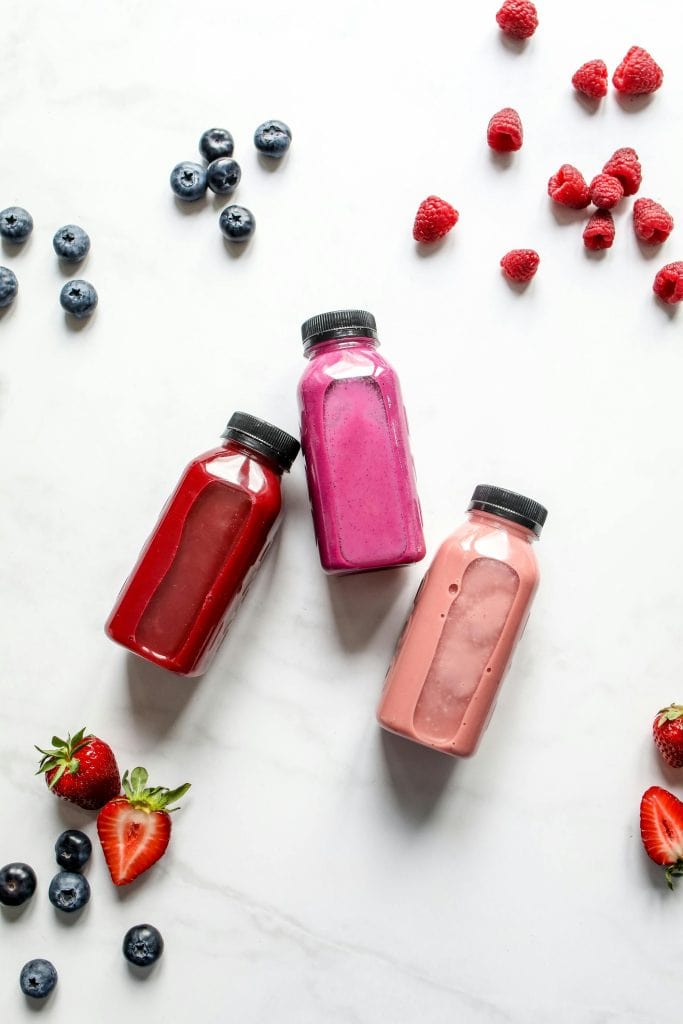
Pre-Made Protein Shakes: Just Say No
Those ready-to-drink protein shakes in the grocery store cooler? Almost all of them are full of junk. I’m talking about Muscle Milk, Premier Protein, Ensure—all the big brands. They’re loaded with artificial sweeteners, vegetable oils, synthetic vitamins, and thickening agents.
I fell for the convenience factor hard when I was working crazy hours. I’d grab one of those shakes, thinking I was making a smart choice for a quick meal replacement. Then I actually read the ingredient list on my favorite chocolate protein shake, and it was like a chemistry experiment. Cellulose gel, carrageenan, acesulfame potassium, sucralose, artificial flavors—the list went on forever.
The only pre-made protein drinks I’ve found that are actually clean are the ones from brands like Koia (made with coconut milk and pea protein) and Orgain’s organic ready-to-drink shakes. But honestly, they’re expensive—like $4-5 per bottle. For that price, I’d rather make my own smoothie at home in less than five minutes.
My honest opinion: store-bought smoothies are great for travel, emergencies, or when you don’t have time. But they rarely beat a homemade smoothie in terms of freshness, cost, and control over what goes in. Think of them as a clean ‘better than fast food’ option, not a daily staple.
Build Your Own: 3 Clean Eating Smoothie Recipes
These are the recipes I actually make. I’ve tested each one for taste, saturation, and real-world usability — meaning I make them on busy mornings before I’ve had coffee. They all work.
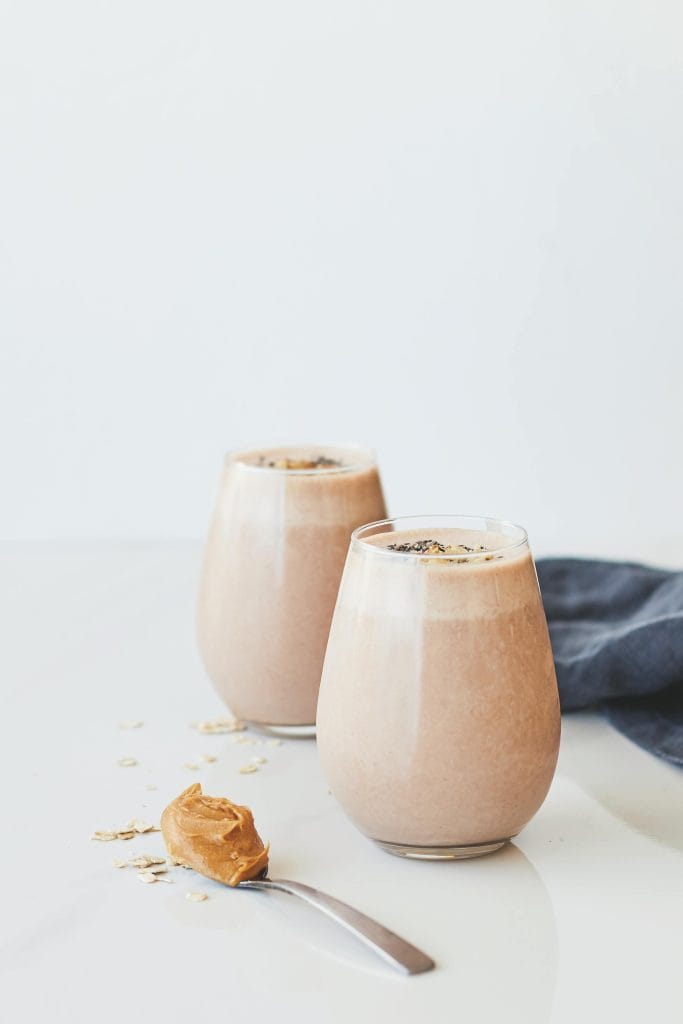
Recipe 1: The Classic Smoothie
This is my go-to. It tastes like a chocolate-peanut-butter shake. Nobody can believe there’s spinach in it.
Ingredients:
- 1 cup unsweetened almond milk
- 1 cup fresh baby spinach
- ½ frozen avocado (slice before freezing for easier blending)
- 1 serving of chocolate protein powder (20-25g protein)
- 1 tablespoon of nut butter and 1 tablespoon ground flaxseed
- Optional: 1 tablespoon cacao powder
Instructions:
- Add liquid to the blender first.
- Add spinach and blend until smooth.
- Add remaining ingredients and blend on high for 45–60 seconds.
- Pour and enjoy immediately or refrigerate up to 24 hours.
This smoothie runs about 350-400 calories and 25–30 grams of protein, depending on your protein powder, 22-26g fat, and 12-18g carbs. That’s a genuinely solid clean-eating meal.
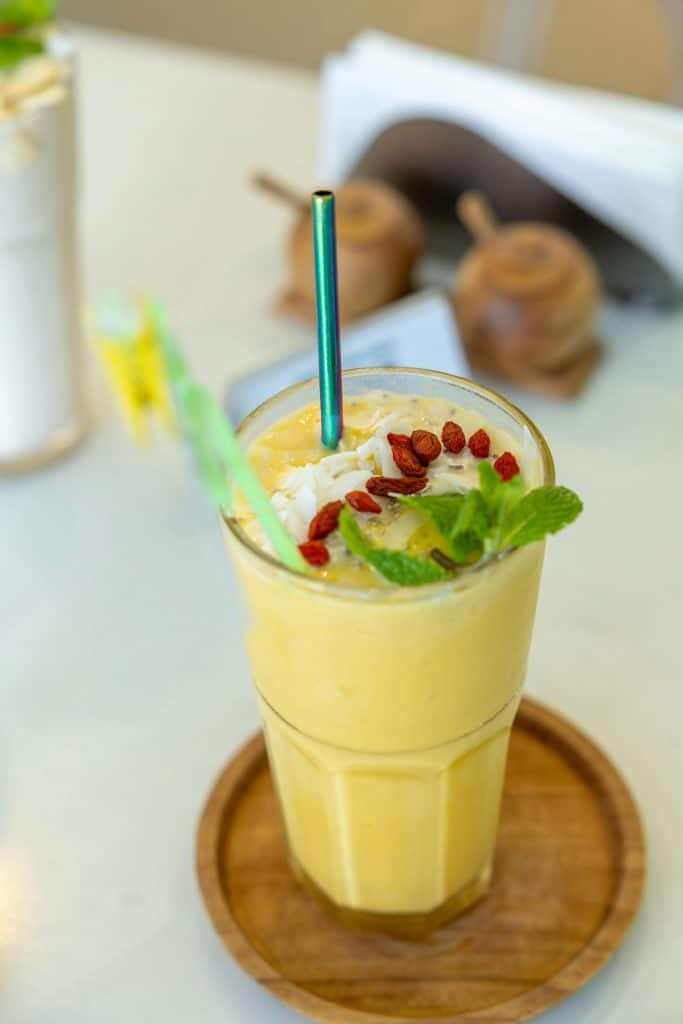
Recipe 2: The Anti-Inflammatory Tropical Smoothie
This one is my Sunday morning smoothie — I make it when I want to feel really good and give my body a little extra care. Turmeric and ginger are both well-researched for their anti-inflammatory properties, and the coconut water keeps it light and hydrating.
Ingredients:
- 1 cup unsweetened full-fat coconut milk
- ½-1 cup frozen cauliflower rice
- ½ cup frozen mango, ½ cup frozen pineapple, ½ frozen banana
- 1 serving vanilla whey isolate (approx. 20–25g protein)
- 1 tablespoon lime juice
- ¼ tsp ginger or 1 tablespoon of fresh grated ginger
- ¼ tsp tumeric or ½ tsp fresh tumeric
- Handful of ice if desired
Instructions:
- Blend all ingredients on high for 60 seconds.
- If too thick, add a splash more liquid.
- Taste and adjust
- This smoothie runs about 300-350 calories and 25–30 grams of protein, depending on your protein powder, 7-10g fat, and 30-40g carbs. That’s a genuinely solid clean-eating meal.
This smoothie is golden-orange and beautiful. It tastes tropical and slightly warm from the ginger. It’s one of those smoothies that people ask you for the recipe.
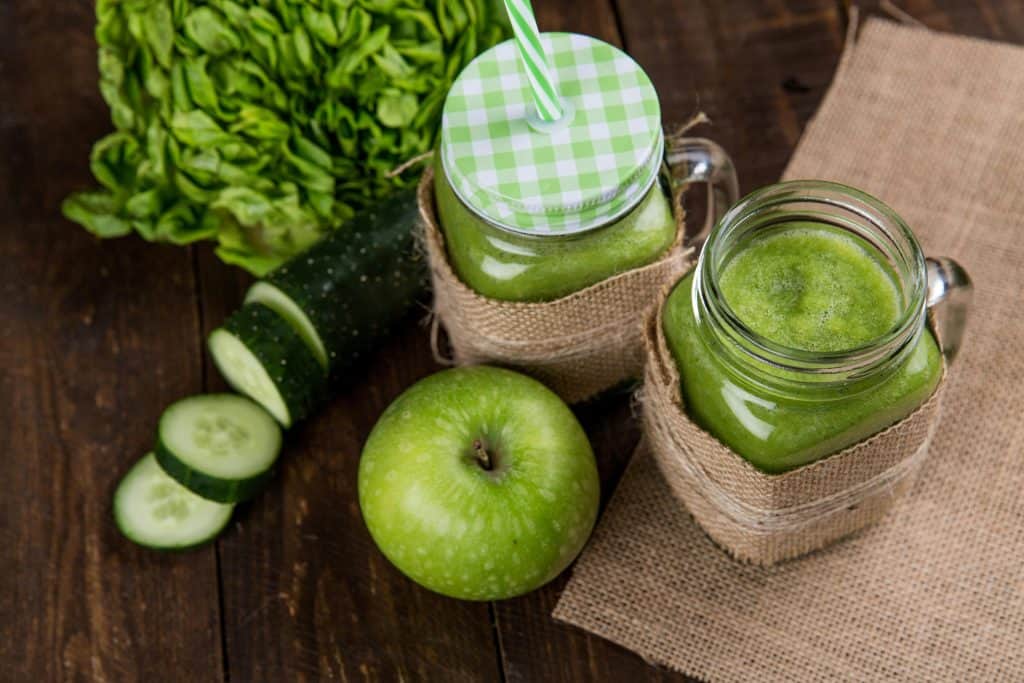
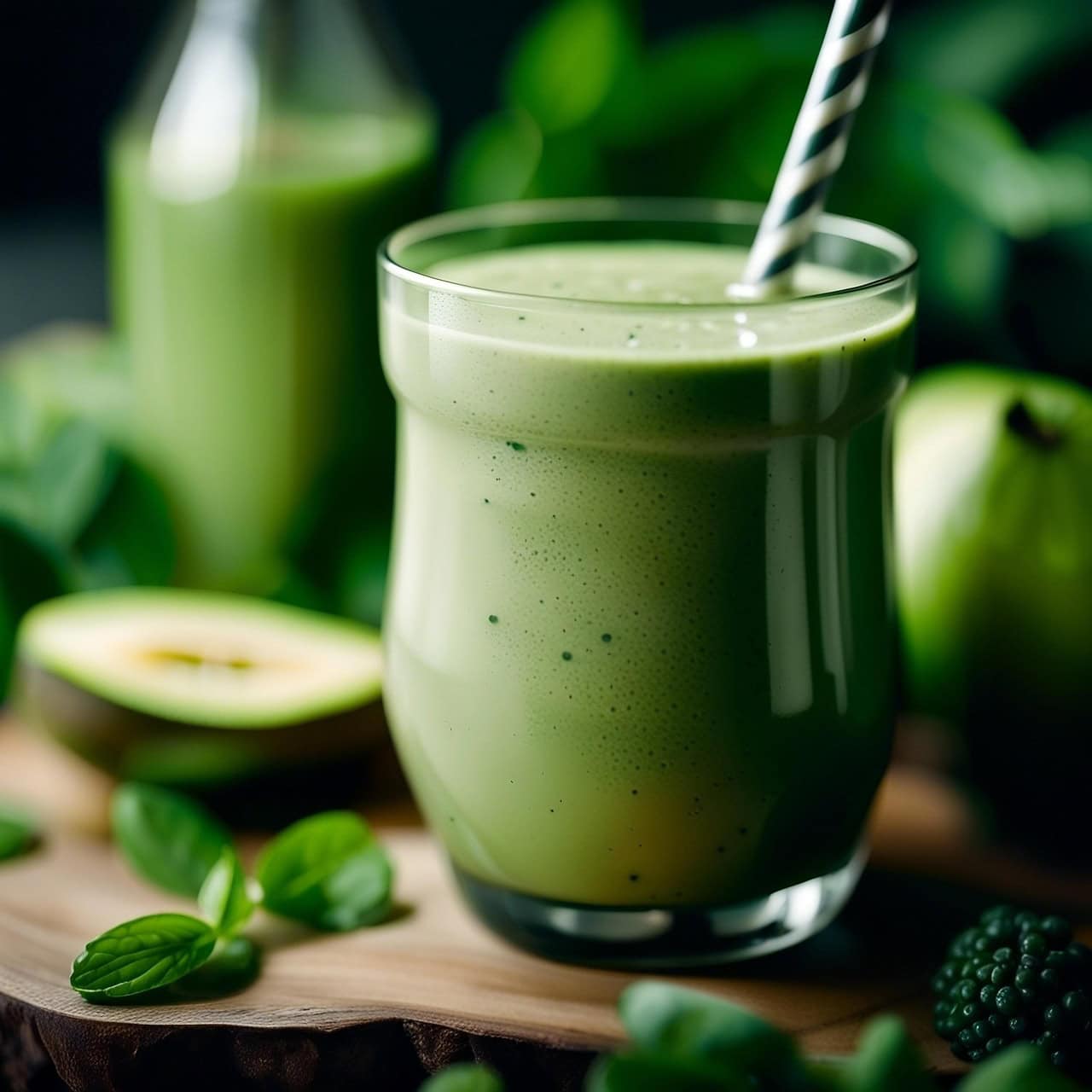
Recipe 3: Kimberly Snyder’s Glowing Green Smoothie (My Version)
If you’ve spent any time in the wellness space, you’ve probably heard of the Glowing Green Smoothie. It was created by nutritionist and New York Times bestselling author Kimberly Snyder, and it became one of the most iconic green smoothies in the clean eating world for good reason.
The original recipe is leafy green-forward and lower in fruit sugar than most green smoothies, making it a true ‘green’ smoothie rather than a fruit smoothie with greens added for color. I’ve adapted it slightly for everyday use, but the spirit of the recipe is all Kimberly’s.
I recommend visiting kimberlysnyder.com for her original formula and her full story behind it — it’s worth reading. https://mysolluna.com/pages/green-glowing-smoothie
My Everyday Version of the Glowing Green Smoothie:
Ingredients (makes 1 large or 2 small servings):
- 1.5 cups cold water
- 1 large head of romaine lettuce, roughly chopped
- 1 cup spinach/kale
- 1 medium apple, cored and chopped (skin on)
- 1 medium pear, cored and chopped (skin on)
- 1 banana
- Juice of half a lemon
- Optional: 1/4 bunch of fresh cilantro (Kimberly’s version includes this — it’s polarizing, but I love it)
Instructions:
- Add water to the blender.
- Blend the romaine and spinach with the water first until completely smooth. This step matters — blending greens before fruit gives you a truly smooth result.
- Add apple, pear, banana, and lemon juice.
- Blend on high for 30–60 seconds until creamy and smooth.
- Drink fresh — this smoothie is best consumed immediately or within a few hours.
Why I love this one: It’s fruit-sweetened, but the greens really are the star here. It’s lighter than a protein smoothie, very hydrating, and has a gentle sweetness. The primary benefits of a glowing green smoothie include improved digestion and gut health, detoxification and immune support, inflammation reduction, skin health, increased energy levels, and hydration. These advantages stem from a high concentration of vitamins, minerals, antioxidants, and fiber provided by its fruit and vegetable ingredients. I drink this when I want to feel clean and refreshed — not heavy or overly full.
This smoothie runs about 200 calories, 5-7 grams of protein, 1-2 g fat, 10-12g fiber, and 45-55g carbs. This recipe is intentionally lower in protein. If you need a complete breakfast, add a scoop of unflavored protein powder or pair it with a hard-boiled egg or clean-eating snack.
Clean Smoothie Meal Prep Tips
Smoothies are one of the easiest things to prep in advance. Here’s how I set myself up for the whole week in about 20 minutes:
- Make smoothie freezer packs: Pre-measure fruit and greens into individual zip-lock bags or reusable silicone bags. In the morning, just dump, add liquid and protein, blend. Done in under 3 minutes.
- Freeze banana (and avocado) coins: Slice ripe bananas into chunks and freeze in a single layer before transferring to a bag. Frozen banana is the secret to thick, creamy, clean smoothies.
- Pre-measure your protein powder: If you add protein every day, measure 7 servings into small bags or a week’s worth into a jar at the start of the week.
- Keep a well-stocked smoothie drawer: Designate one freezer drawer or shelf for smoothie ingredients — frozen fruit, frozen greens, protein packs. This makes the habit automatic.
Want more meal prep ideas? Check out my guide to clean eating meal prep for beginners. https://kelliannscheibe.com/clean-eating-meal-prep-2-hour-sunday-system
Frequently Asked Questions
Are smoothies good for clean eating?
Yes — when made with whole food ingredients and no added sugars, smoothies are an excellent clean-eating option. The key is building your smoothie intentionally, using the formula in this article rather than adding processed ingredients like sweetened yogurt, juice, or flavored syrups.
Is it okay to add protein powder to a clean-eating smoothie?
Absolutely, as long as you choose a clean protein powder. Look for short ingredient lists, no artificial sweeteners, and ideally a third-party quality certification. Whey isolate, pea protein isolate, and unflavored collagen peptides are my top three picks.
What liquid should I use in a clean smoothie?
Unsweetened almond milk, oat milk, coconut water, and plain water are all great options. Avoid fruit juices (even 100% juice adds significant sugar), sweetened plant milks, and dairy milk if you are lactose intolerant.
Can I make smoothies ahead of time?
Yes, with a caveat. Most smoothies stay good in the refrigerator for up to 24 hours in a sealed jar. Green smoothies with spinach or kale are best consumed within 12 hours before oxidation affects flavor and color. Smoothie packs — with ingredients pre-measured but not blended — can be frozen for up to 3 months.
How much protein should a clean-eating smoothie have?
For a snack, 10–15 grams is plenty. For a full meal replacement, aim for 20–30 grams. Pair your protein powder with a healthy fat and fiber-rich fruit for the best saturation and blood sugar response.
Final Thoughts
Smoothies are one of my favorite clean-eating wins because they are fast, flexible, and genuinely delicious. Whether you’re using the basic formula and improvising each morning, following the Kimberly Snyder Glowing Green Smoothie recipe to the letter, or grabbing a clean option from the grocery store on a busy travel day, the point is that you’re nourishing your body with real food.
Don’t overthink it. Start with the formula. Taste it. Adjust it. Make it yours.
Here’s to blending in a little more nourishment — one smoothie at a time. https://kelliannscheibe.com/best-beverages-for-clean-eating