Clean Eating vs Whole30: Use Whole30 as Your Clean Reset

Is Whole30 the Same as Clean Eating?
Have you been thinking about doing a Whole30? Maybe a friend did it and raved about the results, or you’ve seen it trending online and wondered: ‘Is this just clean eating with stricter rules?’ That’s honestly one of the best questions you can ask — because the answer tells you so much about how to use both approaches together!
Here’s my take as a nurse with 37 years of clinical experience: Whole30 and clean eating are related, but they serve very different purposes. Think of clean eating as your everyday lifestyle — the sustainable, flexible, long-term way you nourish yourself. And think of Whole30 as one of the most powerful short-term tools you’ll ever use to deepen and reset that clean eating lifestyle.
Let me break down exactly how these two approaches compare, where they overlap, and how to use them together for maximum health benefits.
Heads up — some links in this post are affiliate links, meaning I may earn a small commission if you shop through them, at no additional cost to you. I only recommend products I truly love and use myself.
What Is Clean Eating?
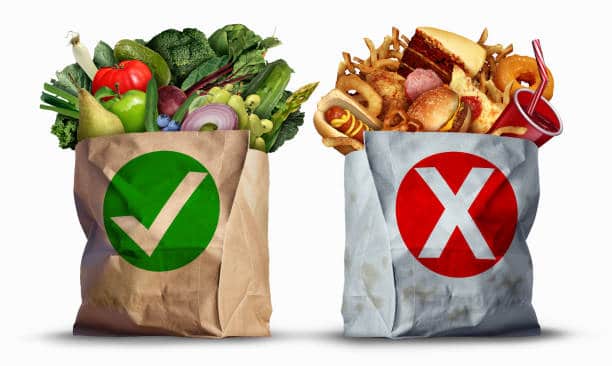
Clean eating is a food philosophy, not a diet. It’s the decision to choose whole, real, minimally processed foods as the foundation of your daily eating — most of the time. Here at Nourish & Thrive, I teach clean eating through the 80/20 rule: 80% of the time, you choose the cleanest option available. The other 20% is life — and that’s perfectly okay.
One of my favorite clean eating principles is the grandmother ingredient test. If your grandmother wouldn’t recognize an ingredient on the label, it probably doesn’t belong in your cart. Keep it simple. Keep it real. That’s clean eating in a nutshell.
Clean eating isn’t about perfection or restriction. It’s about building a lifelong relationship with real food — one meal at a time.
What Is the Whole30?
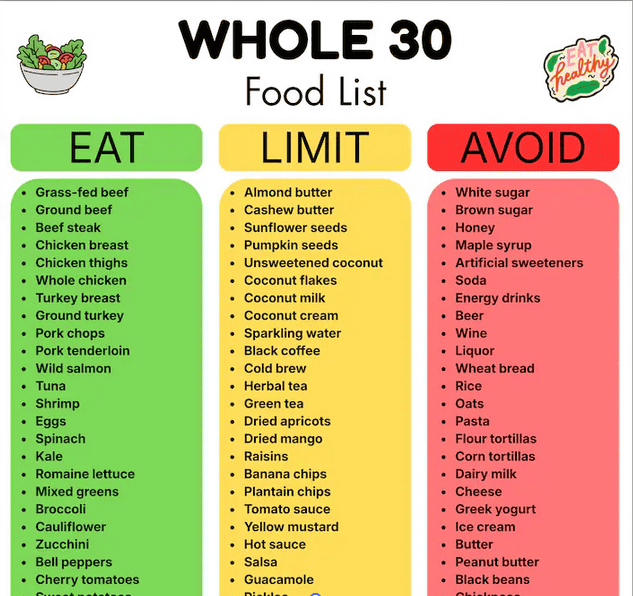
Whole30 is a structured, 30-day elimination protocol created by Melissa Urban (formerly Melissa Hartwig) and Dallas Hartwig. The goal is to eliminate certain food groups for 30 days to reset your digestion, break food habits, reduce inflammation, and identify potential food sensitivities.
During a Whole30, you eliminate all added sugars (including honey and maple syrup), alcohol, grains (all grains, including whole grains), legumes (including peanuts and soy), and dairy of any kind. You also avoid carrageenan, nitrates, and sulfites. No exceptions. No cheats. The rules are intentionally strict — and that strictness is actually the whole point.
After the 30 days, you enter a careful reintroduction phase where you add food groups back one at a time, noting how each one makes you feel. This reintroduction data is incredibly valuable for personalizing your long-term eating approach.
💡 Fun fact: Whole30 doesn’t require calorie counting or weighing food. You just eat the approved foods until you’re satisfied. No tracking apps needed!
Clean Eating vs Whole30: Their Similarities
These two approaches have more in common than you might think:
- Both prioritize whole, real, unprocessed foods above all else
- Both eliminate refined sugar, artificial additives, and packaged convenience foods
- Both encourage cooking at home and reading ingredient labels carefully
- Both support reduced inflammation, better digestion, and more stable energy
- Both build a stronger awareness of what’s actually in your food
If you’re already a clean eater, a Whole30 will feel challenging but familiar. You’re already eating real food — you’re just tightening the parameters temporarily.
Where Whole30 and Clean Eating Differ
The differences are significant — and understanding them helps you use both tools wisely.
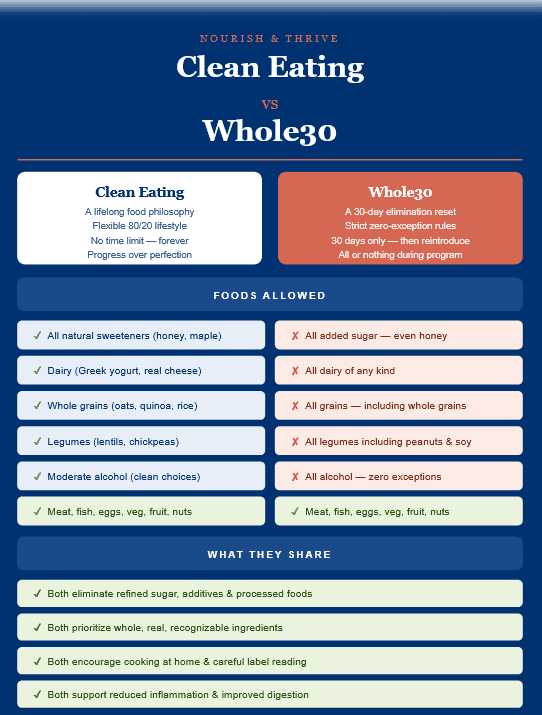
Clean eating is a lifelong, flexible philosophy with an 80/20 framework. Whole30 is a strict, 30-day protocol with zero flexibility during the program. There are no ‘Whole30-ish’ days. You’re either on it or you’re not — and that intentional structure is what makes it so effective as a reset tool.
Clean eating welcomes high-quality dairy like plain Greek yogurt and aged cheese. Whole30 eliminates all dairy. Clean eating includes whole grains like quinoa and oats as clean carbohydrate sources. Whole30 says no grains of any kind. Clean eating embraces legumes — lentils, black beans, chickpeas — as clean, affordable protein options. Whole30 removes them entirely.
One more unique Whole30 rule that surprises a lot of people: you’re not allowed to recreate treats with compliant ingredients. So even a ‘paleo pancake’ made with compliant ingredients isn’t Whole30-approved. The program wants you to change your relationship with food — not just swap one ingredient for another.
How to Use Whole30 as a Clean Eating Reset
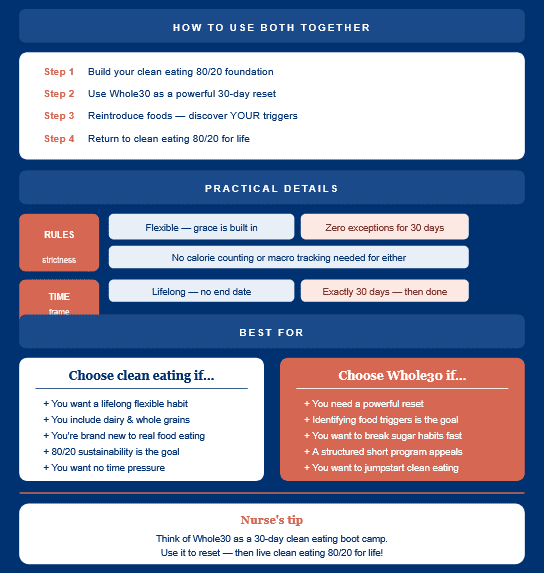
Here’s my favorite way to think about Whole30: it’s a 30-day intensive clean eating boot camp. And it’s one of the most powerful tools in your health toolkit.
I recommend using Whole30 strategically — not as your permanent way of eating, but as a reset when you need one. Here’s when it makes the most sense:
- You’ve gotten off track with clean eating and want to break the sugar/processed food cycle
- You’re experiencing unexplained symptoms (bloating, skin issues, fatigue) and want to identify food triggers
- You want to build stronger, clean eating habits and motivation after a plateau
- It’s January, and you want a focused, structured fresh start for the new year
After completing your Whole30, use the reintroduction phase intentionally. Which foods made you feel bloated? Which ones affected your sleep? Which ones seemed totally fine? That data becomes the foundation for your personalized clean eating approach going forward.
Whole30-Compliant Clean Eating Meal Ideas
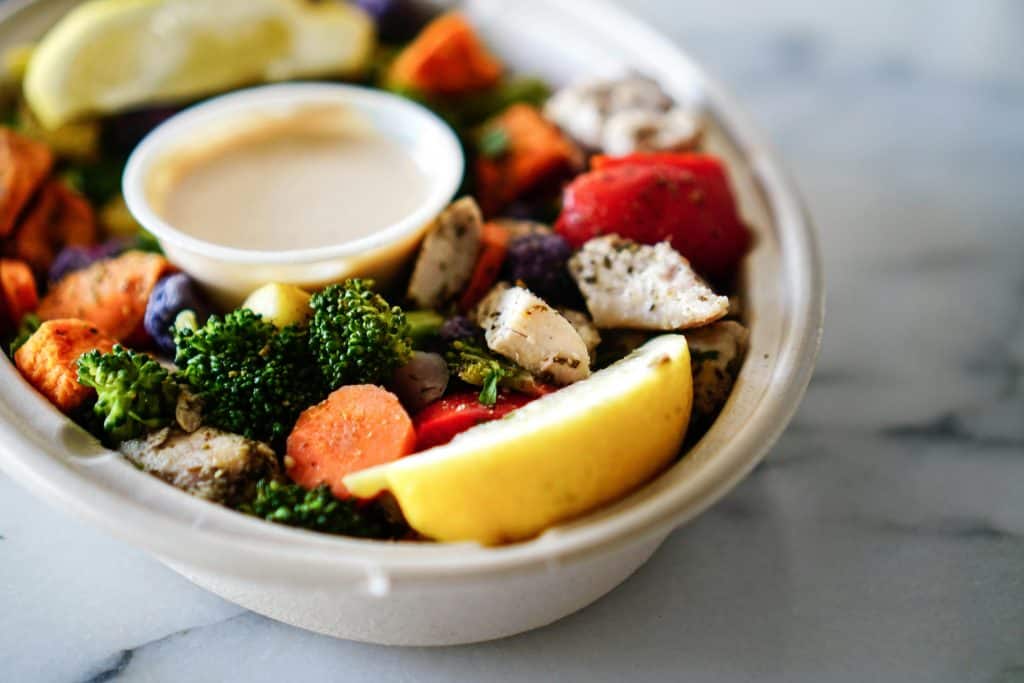
Wondering what a week of Whole30-compliant clean eating looks like? Here are some delicious real-food ideas:
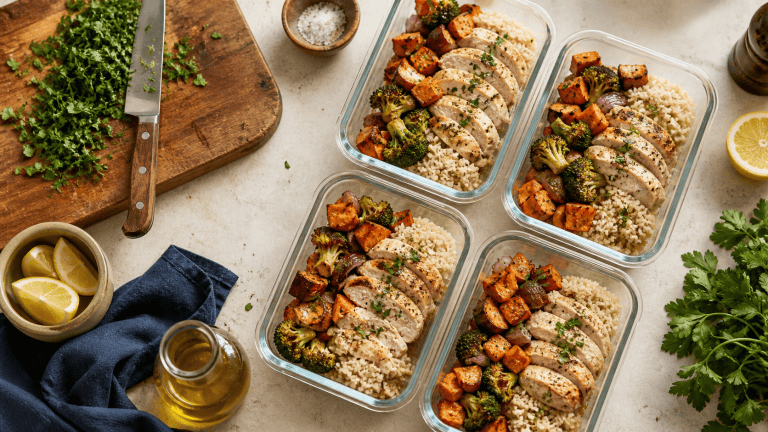
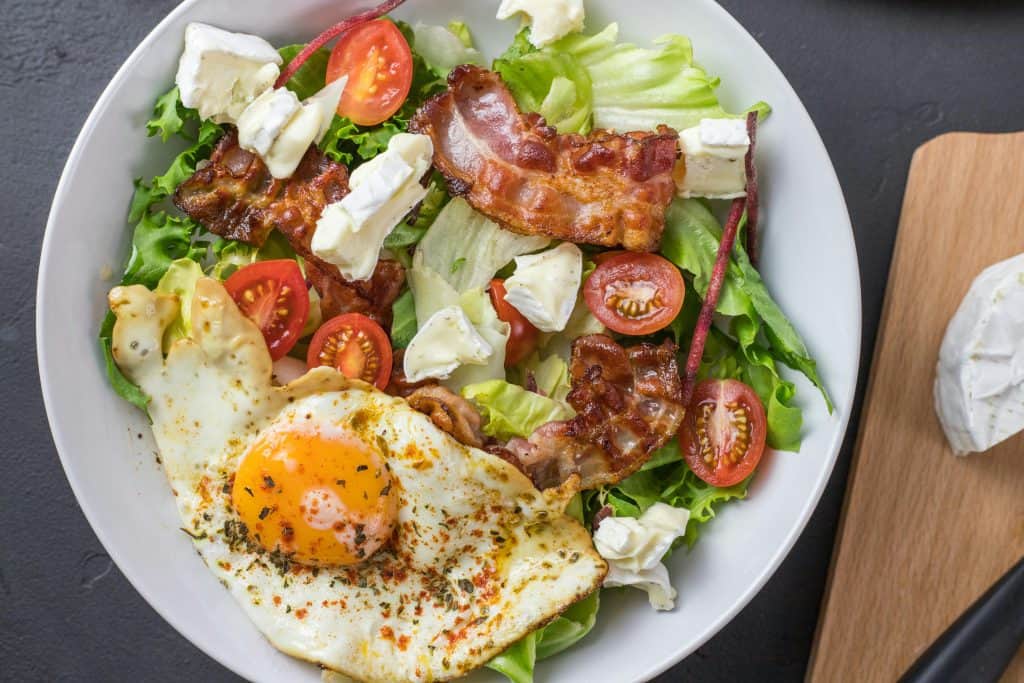
- Breakfast: sweet potato hash with pastured eggs, sautéed kale, and a drizzle of olive oil
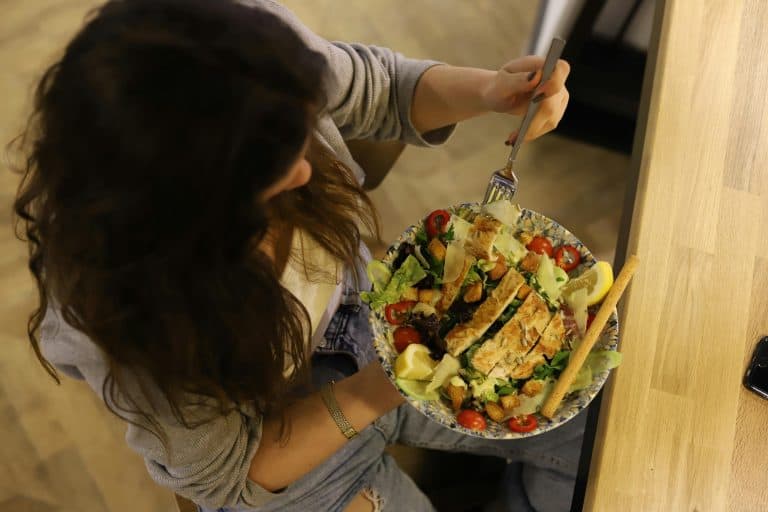
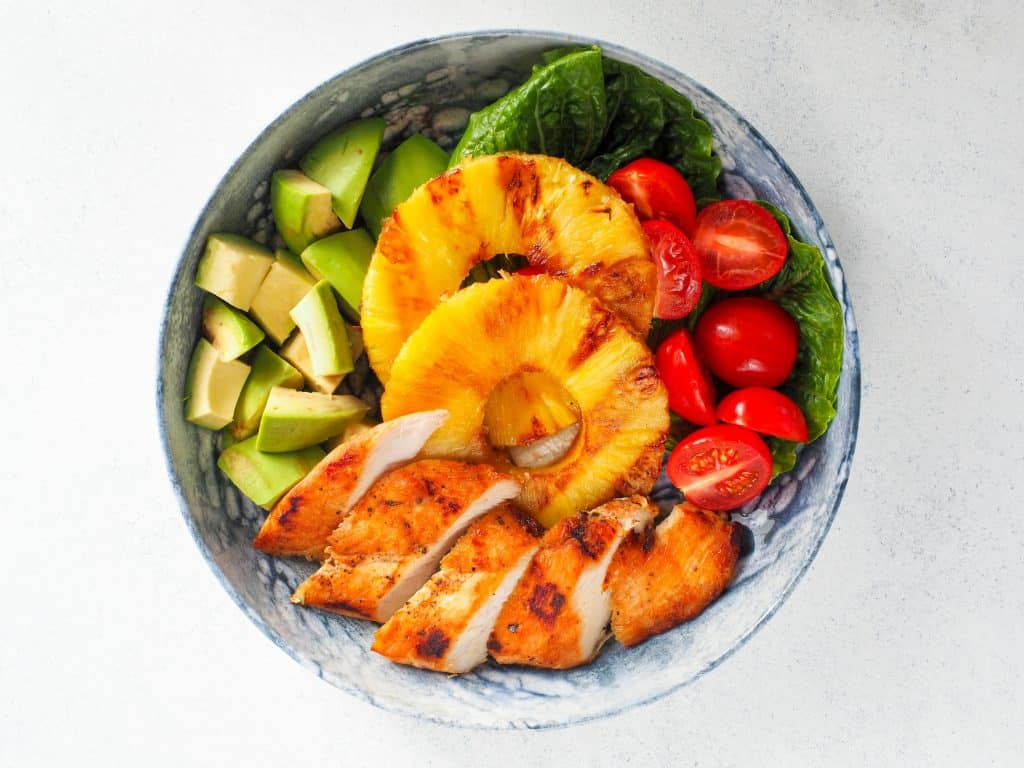
- Lunch: grilled chicken salad over mixed greens with avocado, cucumber, and a lemon-olive oil dressing
- Dinner: baked wild-caught cod with roasted broccoli and cauliflower mash with ghee
- Snacks: apple with almond butter, compliant turkey or beef jerky (no sugar/soy), raw mixed nuts
Every one of these meals is both Whole30-compliant AND clean eating approved. The overlap really is that significant!
💡 Grab my Clean Eating Grocery List at kelliannscheibe.com — it’s easy to adapt for Whole30 shopping!
Life After Whole30: Transitioning to Clean Eating 80/20
This is honestly the most important part — and where a lot of people drop the ball. After 30 days of Whole30 structure, the question becomes: now what?
Here’s my nurse-approved transition plan:
- Reintroduce one food group at a time, with at least 2–3 days between each new introduction
- Keep a simple food and symptom journal during reintroduction — digestion, energy, mood, skin, sleep
- Note which foods caused reactions and which felt completely fine
- Build your personal clean eating framework based on this data
- Adopt the 80/20 rule going forward — clean eating without the rigidity of Whole30
And here’s a tip I give all my readers: revisit Whole30 once a year if you need it. Maybe every January or June. Maybe after a vacation. It’s a powerful tool to have in your back pocket — not a lifestyle you have to live forever.
Clean Eating vs Whole30: Which Is Right for You?
If you’re brand new to real food eating, I’d actually suggest starting with clean eating basics before jumping into a full Whole30. Get comfortable cooking at home, reading labels, and making cleaner swaps. Then, once you have some foundation, use Whole30 as your first major reset.
If you’re already a clean eater but feeling stuck, sluggish, or just need a jumpstart — Whole30 is a beautiful, powerful option. The 30-day commitment gives your body a true elimination reset, and the reintroduction teaches you more about your individual needs than almost anything else can.
My Final Thoughts: Clean Eating and Whole30 Are Partners
At the end of the day, clean eating and Whole30 are two sides of the same coin. Whole30 is an intensive short-term intervention. Clean eating is a sustainable, long-term lifestyle. Used together — strategically and with intention — they create a health approach that is both powerful and deeply nourishing.
You don’t have to choose between them. Let Whole30 teach you. Let clean eating sustain you. That’s the Nourish & Thrive way!
Ready to start? Visit kelliannscheibe.com for my free Clean Eating Grocery List, meal prep guides, and everything you need to begin your real food journey today. You’ve got this!