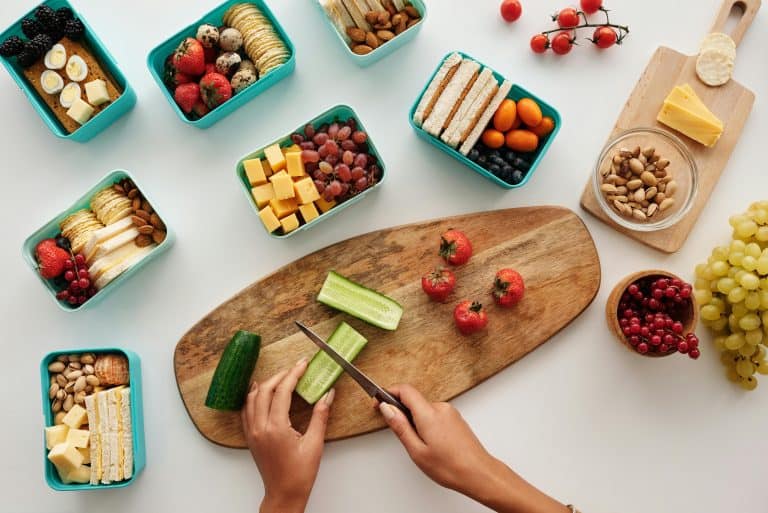
The Great Protein Showdown: Vegan, Vegetarian, or Traditional — Which One Wins After 35?

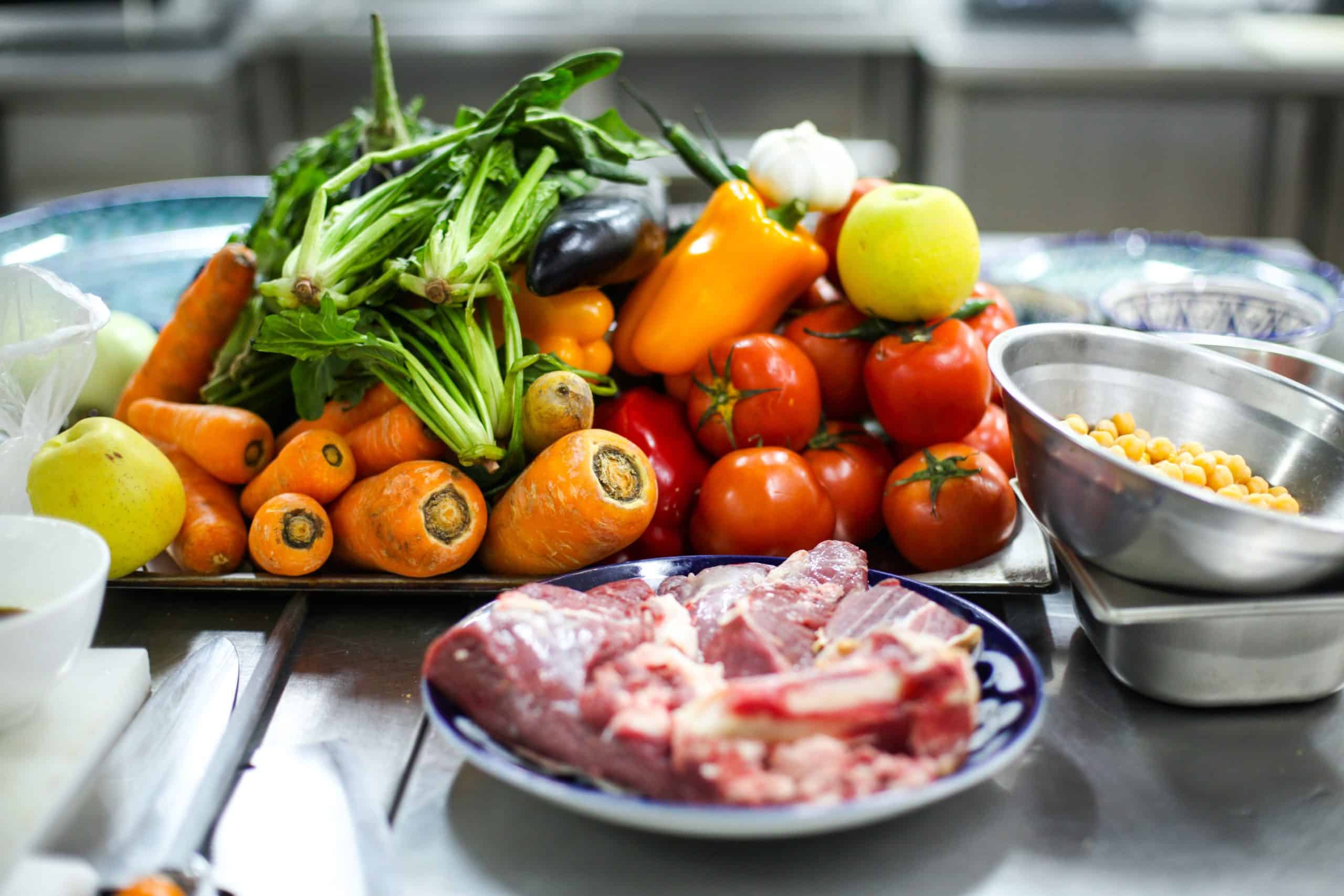
“Should I go high-protein vegan, vegetarian, or traditional ?” It’s one of the questions I hear most often from women in this community, usually somewhere in their 40s or 50s, who’ve noticed their body changing — a little less muscle, a little more midsection, energy that doesn’t bounce back the way it used to.
With 37 years of nursing experience, I spend a lot of time reading research on this topic so you don’t have to sort through it yourself. I’m going to walk you through all three high-protein approaches honestly — no fear-mongering about any of them — so you can decide what actually fits your body, your budget, and your kitchen.
Heads up — some links in this post are affiliate links, meaning I may earn a small commission if you shop through them, at no additional cost to you. I only recommend products I truly love and use myself.
Why Protein Matters More After 35
Starting in our mid-30s, we naturally begin to lose muscle mass — a process called sarcopenia. It speeds up through perimenopause and menopause as estrogen declines, because estrogen plays a role in how efficiently our muscles use protein to rebuild themselves.
Enough protein does three things that matter a lot at this stage of life:
- Preserves lean muscle, which keeps your metabolism from slowing down as much
- Supports bone density, since bone is partly protein (collagen) and needs amino acids to remodel
- Improves satiety, so blood sugar and appetite stay steadier through the day
Most women 35-60 need roughly 0.7 to 1.0 grams of protein per pound of body weight daily — higher than the standard RDA, which was really built around preventing deficiency, not optimizing midlife health. The real question isn’t whether to eat high-protein. It’s which foods you use to get there.
Why Fiber Matters Just as Much After 35
Protein gets most of the attention, but fiber deserves equal billing — especially through perimenopause and menopause. The daily goal for women is 25 to 35 grams, but most women in this age group get closer to 15 grams.
Here’s what adequate fiber is doing for you behind the scenes:
- Helps clear excess estrogen from the body, which matters as hormone levels shift and fluctuate
- Slows glucose absorption, which supports steadier blood sugar and less of the energy crash-and-craving cycle
- Lowers LDL (“bad”) cholesterol, which becomes more important as cardiovascular risk rises after menopause
- Feeds the gut microbiome, which research increasingly links to mood, immunity, and even hormone metabolism
- Improves satiety, so you stay full longer between meals — a natural ally if weight management is a goal
- Keeps digestion moving, since constipation becomes more common as estrogen declines
Fiber and protein work best as a team, not competitors. As you’ll see in the comparison below, how easily you hit that 25-35 gram fiber goal often depends on which of these three eating patterns you choose.
Three Approaches, Side by Side
High-Protein Vegan
Builds every gram of protein from plant sources only — tofu, tempeh, edamame, lentils, beans, seitan, quinoa, hemp seeds, and increasingly, plant-based protein powders. No animal products of any kind, including eggs and dairy.
High-Protein Vegetarian
Uses the same plant-protein foundation as vegan, but adds eggs and dairy back in — Greek yogurt, cottage cheese, and eggs make hitting your daily protein target noticeably easier while keeping meat off the plate.
Traditional High-Protein
Leans on animal sources — chicken, turkey, fish, eggs, Greek yogurt, cottage cheese, and lean beef — often alongside moderate carbs and vegetables. Every animal protein is naturally “complete,” carrying all nine essential amino acids in one food.
A quick note on “complete” protein
Most plant proteins are missing one or more essential amino acids, so vegan and vegetarian eaters need some variety across the day rather than relying on a single source. Eggs, dairy, and all animal proteins are complete on their own.
- Plant proteins complete on their own: soy (tofu, tempeh, edamame), quinoa, buckwheat, hemp seeds
- Complementary pairs that combine into a complete protein: rice + beans, hummus + whole-grain pita, peanut butter + whole-grain bread, lentils + brown rice
You don’t have to eat the pairing in the same meal — just somewhere within the same day.
Comparison Table: Vegan vs. Vegetarian vs. Traditional
| Factor | Vegan | Vegetarian | Traditional |
| Complete Protein | Needs variety across the day | Easier — eggs/dairy are complete | Complete in every source |
| Fiber intake | Highest (legumes, whole grains) | High | Typically low unless veggies prioritized |
| Saturated fat | Lowest | Low-moderate (depends on dairy/eggs) | Can run high with fatty/processed meats |
| Iron & B12 | Needs supplementation (B12 especially) | B12 covered by eggs/dairy; iron still needs attention | Readily available, well-absorbed |
| Meal prep ease | Most prep-intensive | Moderate | Generally Quick |
| Cost | Often lowest per gram of protein | Low-moderate | Often highest, especially grass-fed & quality cuts |
| Grocery availability | Growing, some specialty items | Widely available | Widely available everywhere |
| Best fit for | Heart-health focus, highest fiber goals | Plant-forward with easier logistics | Simpler planning, higher iron/B12 needs |
The Honest Pros and Cons
High-Protein Vegan
- Pro: Highest fiber of the three, which supports gut health and steadier blood sugar
- Pro: Lowest saturated fat — a real plus for heart health after menopause
- Watch: B12 must come from a supplement or fortified food — it isn’t in plant foods at all
- Watch: Takes the most planning to hit protein targets without leaning on refined carbs
High-Protein Vegetarian
- Pro: Eggs and dairy make hitting your protein number much easier than fully vegan
- Pro: B12 is naturally covered through eggs and dairy
- Watch: Easy to lean too heavily on cheese and cream-based dishes, which raises saturated fat
- Watch: Iron from plant sources still needs a vitamin C pairing to absorb well
Traditional High-Protein
- Pro: Easiest to hit your daily protein number with fewer total foods
- Pro: Naturally rich in B12, iron, and zinc — nutrients many midlife women run low on
- Watch: Easy to lean on processed or fatty meats out of convenience
- Watch: Often lower in fiber unless vegetables or legumes are deliberately built into every meal
So Which One Should You Choose?
Here’s my honest answer: it depends on your labs, your history, and your kitchen realities — not on which diet is trending. Two women can have identical goals and thrive on completely different approaches, depending on how their bodies process certain nutrients, activity level, and what they’ll actually stick with.
What I do believe in, for almost everyone, is my 80/20 approach: build 80% of your plate around whole, minimally processed foods — plant or animal — and leave room for the other 20% to be life. You don’t have to pick a permanent team, and plenty of my readers land somewhere in the flexible middle between all three.
A Sample Day of Eating for Each Approach
Vegan Day (~90-100g protein, ~38g fiber)
- Breakfast: Tofu scramble with spinach and a side of quinoa (22g protein / 4g fiber)
- Lunch: Lentil and black bean bowl with brown rice and avocado (28g protein / 15g fiber)
- Snack: Hummus with veggies and a sprinkle of hemp seeds (12g protein / 6g fiber)
- Dinner: Tempeh stir-fry with edamame over quinoa (30g protein / 12g fiber)
This day comfortably lands in the 25-35g fiber goal without any extra effort — legumes and whole grains do the heavy lifting.
Vegetarian Day (~95-105g protein, ~25g fiber)
- Breakfast: Veggie egg muffins with a side of Greek yogurt (26g protein / 1g fiber)
- Lunch: Chickpea and feta salad with quinoa (24g protein / 8g fiber)
- Snack: Cottage cheese with berries (14g protein / 3g fiber)
- Dinner: Greek chickpea and feta skillet with a whole-grain pita (32g protein / 13g fiber)
This day hits the low end of the fiber goal — the chickpeas and pita are doing most of the work, since the egg-and-dairy meals contribute very little fiber on their own.
Traditional Omnivore (~100g protein, ~25g fiber)
- Breakfast: Two eggs with cottage cheese and berries (25g protein / 3g fiber)
- Lunch: Grilled chicken breast salad with chickpeas (35g protein / 8g fiber)
- Snack: 1/3 cup of dried edamame (15g protein / 8g fiber)
- Dinner: Baked salmon with roasted vegetables and a small side of quinoa (25g protein / 6g fiber)
This day hits the 25g fiber floor. A traditional high-protein day needs a deliberate add-in — an extra cup of vegetables, a side of berries, or swapping white rice for a whole grain — to close that gap.
Notice how much these overlap — quinoa, chickpeas, and Greek yogurt show up across more than one category. That’s the 80/20 philosophy in action: the three approaches share more common ground than the labels suggest, and fiber is usually the easiest lever to adjust no matter which one you choose.
Fun High-Protein Recipes for Each Diet Type
One breakfast recipe and one for dinner in each style, so you can try all three approaches this week and see which one feels best in your own kitchen.
Vegan Breakfast: Sunshine Tofu Scramble Bowl
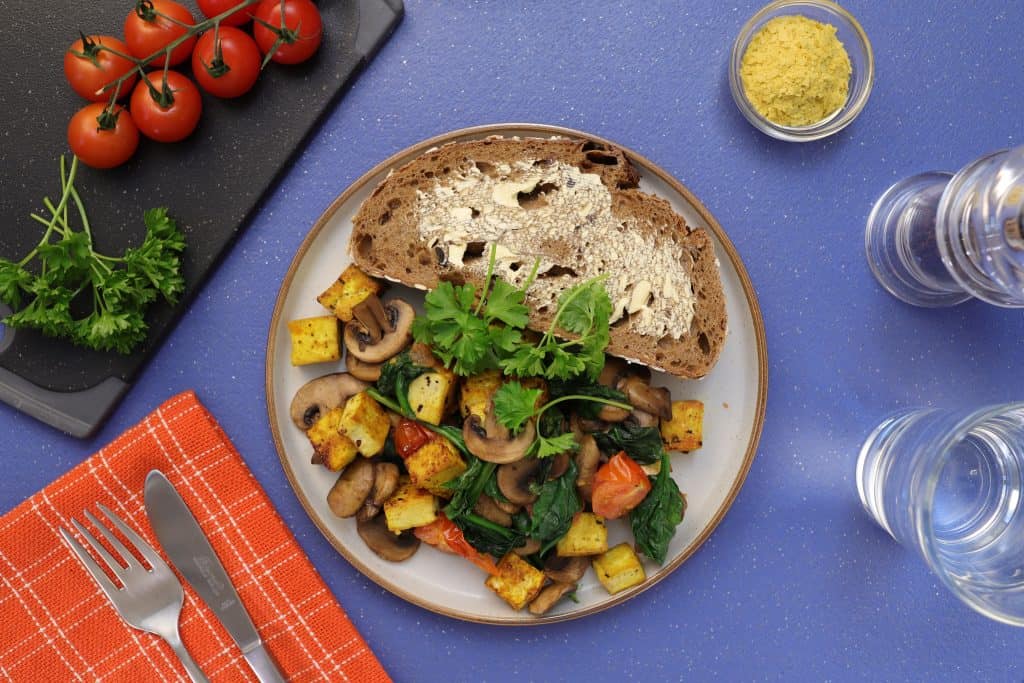
Serves: 2
Nutrition (per serving)
| Calories | Protein | Carbs | Fat | Fiber |
| 290 | 21g | 16g | 18g | 4g |
Delivers 4g fiber before 9am — about 15% of your daily goal in one bowl.
Ingredients
- 1 block (14 oz) firm tofu, drained and crumbled
- 1 cup spinach, chopped
- 1/2 cup cherry tomatoes, halved
- 1/2 tsp turmeric
- 1/2 tsp garlic powder
- 1 tbsp olive oil
- 1/2 cup cooked quinoa
- Salt and pepper to taste
Steps
- Heat olive oil in a skillet over medium heat.
- Add crumbled tofu, turmeric, and garlic powder; cook 5 minutes, stirring occasionally.
- Add spinach and tomatoes; cook until spinach wilts, about 2 minutes.
- Season with salt and pepper.
- Serve warm over a scoop of cooked quinoa.
Vegan Dinner: Rainbow Tempeh Stir-Fry Bowl
Serves: 2
Nutrition (per serving)
| Calories | Protein | Carbs | Fat | Fiber |
| 510 | 34g | 42g | 22g | 12g |
At 12g fiber, this one dinner covers nearly half your daily 25-35g goal.
Ingredients
- 8 oz tempeh, cubed
- 1 cup shelled edamame
- 1 red bell pepper, sliced
- 1 cup broccoli florets
- 2 tbsp low-sodium soy sauce or tamari
- 1 tbsp sesame oil
- 1 clove garlic, minced
- 1 cup cooked quinoa
Steps
- Heat sesame oil in a large skillet or wok over medium-high heat.
- Add tempeh and cook until golden, about 5 minutes.
- Add garlic, bell pepper, and broccoli; stir-fry 4-5 minutes until crisp-tender.
- Stir in edamame and soy sauce; cook 2 more minutes.
- Serve over cooked quinoa.
Vegetarian Breakfast: Veggie-Loaded Egg Muffins
Serves: 4 (2 muffins each)
Nutrition (per serving)
| Calories | Protein | Carbs | Fat | Fiber |
| 210 | 18g | 4g | 14g | 1g |
Fiber is naturally low here since eggs and cheese carry none — pair with a side of berries or whole-grain toast to add 3-4g more.
Ingredients
- 8 large eggs
- 1/2 cup cottage cheese
- 1/2 cup spinach, chopped
- 1/4 cup bell pepper, diced
- 1/4 cup shredded cheddar
- Salt and pepper to taste
- Cooking spray
Steps
- Preheat oven to 350°F and lightly grease a muffin tin.
- Whisk eggs and cottage cheese together in a bowl.
- Stir in spinach, bell pepper, cheddar, salt, and pepper.
- Divide mixture evenly among 8 muffin cups.
- Bake 18-20 minutes until set. Serve warm with a side of Greek yogurt.
Vegetarian Dinner: Greek Goddess Chickpea & Feta Skillet
Serves: 3
Nutrition (per serving)
| Calories | Protein | Carbs | Fat | Fiber |
| 560 | 26g | 52g | 26g | 13g |
Chickpeas and whole-grain pita make this the fiber standout of the vegetarian day at 13g per serving.
Ingredients
- 2 cans (15 oz each) chickpeas, drained and rinsed
- 1 cup crumbled feta
- 1 cup cherry tomatoes, halved
- 1/2 cup Kalamata olives, sliced
- 2 tbsp olive oil
- 1 tsp dried oregano
- 1 clove garlic, minced
- Whole-grain pita, to serve
Steps
- Heat olive oil in a large skillet over medium heat.
- Add garlic and cook 30 seconds until fragrant.
- Add chickpeas and oregano; cook 5 minutes, stirring occasionally.
- Stir in tomatoes and olives; cook 3 more minutes.
- Remove from heat, top with crumbled feta, and serve with warm pita.
Traditional Breakfast: Protein-Packed Turkey & Egg Skillet
Serves: 2
Nutrition (per serving)
| Calories | Protein | Carbs | Fat | Fiber |
| 320 | 24g | 4g | 24g | 1g |
Like most animal-protein breakfasts, this one is fiber-light — add a side of sautéed greens or fruit to bring in a few extra grams.
Ingredients
- 4 oz lean ground turkey
- 3 large eggs, whisked
- 1/2 cup bell pepper, diced
- 1/4 cup onion, diced
- 1/4 cup shredded cheddar
- 1 tbsp olive oil
- Salt and pepper to taste
Steps
- Heat olive oil in a skillet over medium heat.
- Add turkey, onion, and bell pepper; cook until turkey is browned, about 6 minutes.
- Pour whisked eggs over the mixture and stir gently until eggs are set.
- Top with shredded cheddar and serve warm.
Traditional Dinner: Lemon-Herb Salmon with Roasted Veggies
Serves: 2
Nutrition (per serving)
| Calories | Protein | Carbs | Fat | Fiber |
| 430 | 35g | 6g | 31g | 2g |
The roasted vegetables are doing the fiber work here — double the veggie portion if you want to push this closer to 5-6g.
Ingredients
- 2 salmon fillets (5-6 oz each)
- 1 lemon, sliced
- 2 cups mixed vegetables (broccoli, carrots, zucchini)
- 2 tbsp olive oil
- 1 tsp dried herbs (thyme or dill)
- Salt and pepper to taste
Steps
- Preheat oven to 400°F. Line a baking sheet with parchment.
- Toss vegetables with 1 tbsp olive oil, salt, and pepper; spread on the baking sheet.
- Place salmon fillets among the vegetables, drizzle with remaining olive oil, and season with herbs, salt, and pepper.
- Top salmon with lemon slices.
- Roast 15-18 minutes until salmon flakes easily and vegetables are tender.
My Take
I don’t see this as a battle between three camps. I see it as three toolkits for the same goal: preserving your strength, energy, and independence as you move through your 40s, 50s, and beyond.
If your labs show low iron or B12, or you want protein to be effortless, traditional omnivore high-protein with plenty of vegetables layered in may serve you well. If you want to cut your beef intake without sacrificing ease, you can choose chicken or fish, veggies, and legumes. There is new research supporting an omnivore traditional diet even if your cholesterol or blood pressure numbers are trending up. Stop eating processed foods, minimize sugar intake, add healthy fats (olive oil, avocado, nuts), eat plenty of protein, and aim for 30g of daily fiber.
Get your protein from whole foods first, watch your B12 and iron if you’re going plant-forward, and permit yourself to blend all three instead of picking a permanent identity around your diet.
Frequently Asked Questions
Can you get enough protein on a vegan diet after 40?
Yes. With intentional variety across foods like tofu, lentils, quinoa, and beans, along with a B12 supplement, most women can meet their daily protein target on a fully plant-based diet.
Is vegetarian easier than vegan for hitting protein goals?
Generally, yes. Eggs and dairy are complete proteins and naturally contain B12, which makes vegetarian eating a bit more forgiving for hitting your daily protein number.
What’s the easiest way to combine all three approaches?
Build most meals around plant proteins like beans, lentils, and tofu, then add eggs, fish, or Greek yogurt a few times a week to round out your B12, iron, and total protein numbers.